
Now Reading: Iran after Ayatollah Ali Khamenei
-
01
Iran after Ayatollah Ali Khamenei

Proponents of foreign intervention in Iran are unlikely to get the sudden rupture and regime change they hope for.

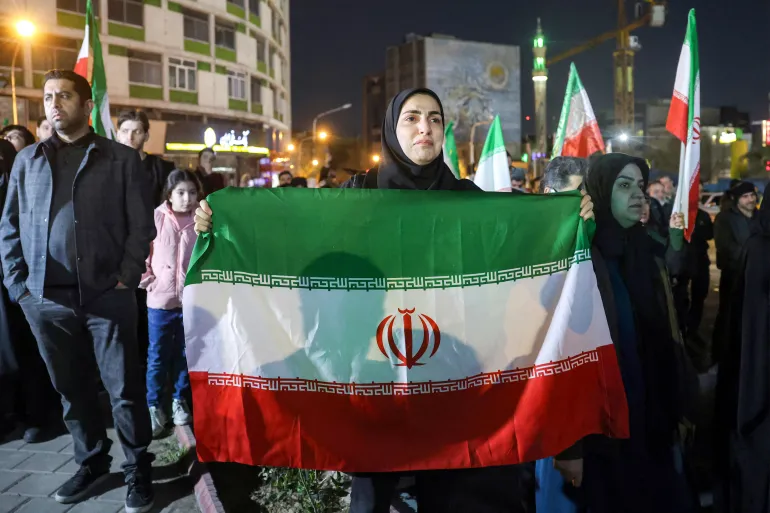
For years, interventionists in the West made the argument that the long-term costs of the political order in Iran, such as repression, economic decay, and social stagnation, outweighed the risks of a violent external regime change. Last month, the “moral barrier” to intervention was significantly lowered by the bloody crackdown on protests in January and the extensive positive coverage of the Iranian opposition in Western media.
The US-Israeli intervention came soon after, with both United States President Donald Trump and Israeli Prime Minister Benjamin Netanyahu urging Iranians to “rise up”. The assassinations of Ayatollah Ali Khamenei and other high-level Iranian officials were celebrated as a major achievement.
Afghanistan experienced regime change in 2001 following the US invasion; that triggered two decades of fighting and attacks on civilians. In 2021, the country saw the return of the ousted regime, but stability remains elusive.
If the central bank, ministries, and regional governorates continue to function despite the leadership vacuum, the state may avoid the total “atomisation” seen in Libya. Furthermore, territorial integrity rests on the continued unity between the regular army (Artesh) and the Islamic Revolutionary Guard Corps (IRGC).
One major challenge would be finding a “national unifier” in the current climate. The bloody repression of the January protests has deeply fractured the relationship between the people and the political elite, making it difficult for any establishment figure to claim broad legitimacy. While a “technocratic-military council” led by figures with managerial backgrounds, such as Parliamentary Speaker Mohammad Bagher Ghalibaf, former President Hassan Rouhani or Secretary of the Supreme National Security Council of Iran Ali Larijani, might attempt to step in to provide a “security-first” stabilisation, they lack the spiritual authority of the late supreme leader.
In the absence of a figure who can bridge the chasm between the embittered street and the survival-driven security apparatus, any new leadership will likely struggle to project authority.
Instability after Khamenei
If institutional continuity fails or the army and the IRGC begin to compete, the risk of fragmentation and persistent conflict would increase. In this scenario, the violent rupture some call for today may mark the beginning of a structurally entrenched cycle of insecurity whose costs will be borne by Iranian society at large.


Related Posts


Stay Informed With the Latest & Most Important News
Previous Post
Next Post



-
 01Latest peace plan offers possible Ukrainian withdrawal from east, Zelensky says
 -
 02At least six killed in Pakistan as fire rips through Karachi shopping mall
 -
 03Read the 14-point draft agreement between the US and Iran
 -
 04Trump-Putin Alaska summit: What’s on the agenda and what’s at stake?
 -
 05Slovenia becomes first EU country to impose arms embargo on Israel
 -
 06India set to host 2030 centenary Commonwealth Games
 -
 07Netanyahu’s rejection of Trump’s 15-point Gaza plan unlikely to be final word