



Now Reading: How the Iran war is rewriting the economics of power … and why Pakistan must read the signals first
-
01
How the Iran war is rewriting the economics of power … and why Pakistan must read the signals first
How the Iran war is rewriting the economics of power … and why Pakistan must read the signals first

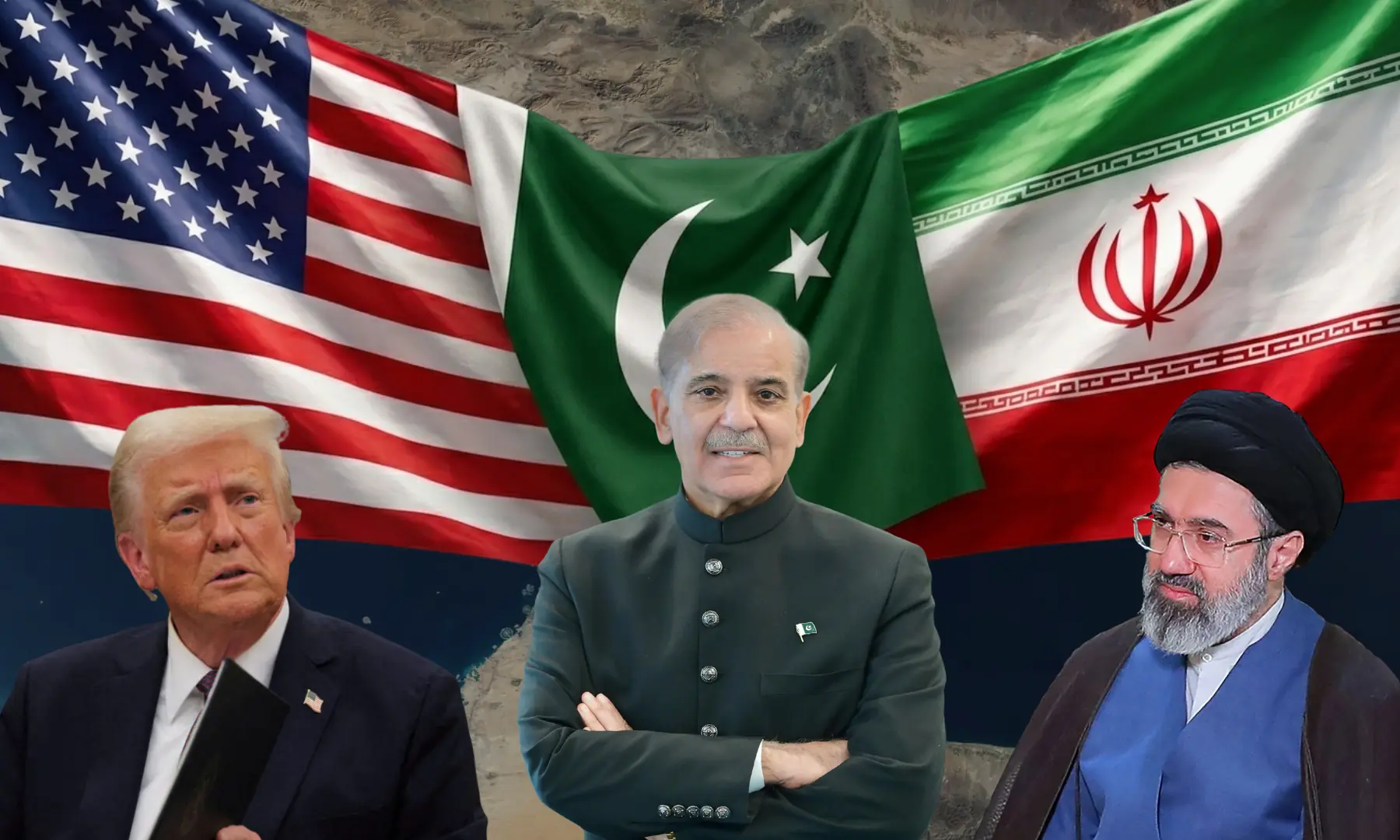

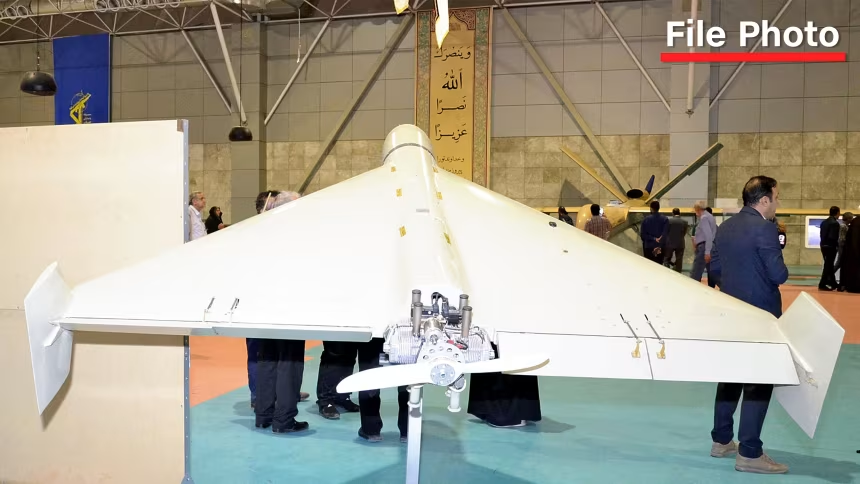
The 2026 war in Iran is the most consequential military laboratory since the Gulf War and like that war, the lessons it is generating will be misread by precisely the institutions that most need to understand them. Just over four weeks into Operation Epic Fury, Iran has launched over 500 ballistic missiles and more than 2,000 drones across the region. Oil prices threaten to breach $200 a barrel. The Strait of Hormuz is effectively closed to unapproved shipping. The United States has deployed a reverse-engineered copy of its adversary’s cheapest drone in its first combat use. And Pakistan is no longer merely watching. It is transmitting ceasefire proposals between Washington and Tehran, offering Islamabad as the venue for talks, and positioning itself at the centre of the most consequential diplomatic moment in the Middle East since the end of the Cold War. The question is whether the same institutional agility now evident in its diplomacy can be applied to its defence procurement.
The unit economics of war
Eisenhower warned of the military-industrial complex in 1961. Today, more than 65 years on, it is worth identifying the specific component of that complex whose product is being tested in Iran: the interlocking ecosystem of Western defence contractors, procurement bureaucracies, and strategic consultancies whose revenue depends on selling air-superiority-first, high-cost, low-volume warfare.
This ecosystem does not merely sell hardware. It sells an entire theory of war, bundled with the platforms that make that theory appear necessary and the sustainment contracts that make those platforms inescapable. Its pricing model has now been tested in real time.
The May 2025 proof of concept
The India-Pakistan conflict of May 2025 validated the same logic in a South Asian context — with implications Pakistan’s defence establishment has an opportunity to capitalise on more fully.
The dependency trap
The F-16 remains a capable aircraft. It is also a platform whose cost of ownership includes ongoing American leverage over Pakistan’s sovereign defence decisions.
For example, the Foreign Military Sales (FMS) framework requires US authorisation for upgrades, spare parts, and operational capabilities. In December 2025, the US approved a $686 million FMS package for F-16 sustainment through 2040, with Lockheed Martin as principal contractor. Of that $686 million, $37 million covers major defence equipment. The remaining $649 million — 95 cents of every dollar — goes to sustainment and modernisation services. Not to new capability. To maintenance of the existing dependency. Consider what $686 million buys in the alternative economy. At $50,000 per unit, it buys 13,720 one-way attack drones. At $4,000 per Ukrainian-model interceptor drone, it buys 171,500 defensive systems. At the production cost of a JF-17 Block III, it buys a squadron. US Air Force Col John Boyd’s ‘OODA’ loop — observe, orient, decide, act — is typically applied to tactical engagements. It applies equally to strategic procurement. Pakistan observed the results of May 2025: Chinese platforms outperformed Western ones in combat. The orientation is clear. But by December 2025, the decision cycle had produced a $686 million sustainment commitment to the platform that didn’t deliver the decisive results, locked in through 2040. The institutional OODA loop — which has proven it can cycle fast when it needs to, as the March 2026 mediation demonstrates — has an opportunity to apply the same speed to procurement. Pakistan has been burned by this dynamic before. In 1990, the United States stopped delivery of 28 F-16s for which Pakistan had already paid $658 million, under the Pressler amendment. It took eight years and a settlement involving cash and wheat to resolve. The institutional memory of that episode is alive in Rawalpindi. The structural conditions that produced it have not changed.
The Gulf opening — and the clock
The 2026 war has exposed a vulnerability in the Gulf security architecture that represents, for Pakistan, what may be the most consequential strategic opportunity since the end of the Cold War. As of today, that opportunity is no longer hypothetical. Pakistan is already in the room.
The strategic dividend
Pakistan’s negotiating position carries additional structural weight through its relationship with Beijing. China’s economic leverage — as Iran’s largest oil customer and a permanent member of the UN Security Council — gives any Pakistan-facilitated agreement a durability that no other mediator can guarantee. A settlement brokered through Islamabad, with Chinese strategic backing, would carry the combined diplomatic weight of two states representing over two billion people. That is not a peripheral contribution to the negotiations. It is the difference between a ceasefire and an architecture.
The state that brokers the peace sets the terms of the security architecture that follows. For Pakistan, successful mediation converts diplomatic capital into tangible strategic returns: security partnerships with GCC states whose infrastructure requires repair and reinforcement, a fundamentally restructured economic relationship with the Gulf, and a position at the centre of the regional order rather than its periphery. The GCC relationship transforms from financial dependency into strategic partnership — with Pakistan as a provider of security rather than a supplicant for aid.
The question that matters
The convergence between India and Israel — accelerated by shared threat perceptions, defence technology transfers, and the realignment of Middle Eastern alliances — represents a genuine medium-term challenge.
The question it poses is not: how many additional fighter squadrons are required? It is more fundamental: is this a conventional military challenge requiring more hardware of the same type — or is it an intelligence, economic, and doctrinal challenge that demands an entirely different response?


Related Posts

Stay Informed With the Latest & Most Important News
Previous Post
Next Post




-
 01Belarus leader gifts rifle to North Korea’s Kim as they sign friendship treaty
 -
 02US sub sinks Iranian warship in Indian Ocean, Hegseth says
 -
 03Russia-US talks on Ukraine peace deal end without breakthrough, Putin aide says
 -
 046 cops martyred in blast targeting armoured police vehicle in KP’s Tank district
 -
 05Shipping giant MSC facilitates trade from Israeli settlements through EU
 -
 06Who was Haytham Ali Tabatabai, Hezbollah official killed by Israel?
 -
 07North Korean hackers bug software used by thousands of US companies in potential crypto heist attempt