
Now Reading: Analysis: Why a ‘quick and clean’ US attack on Iran won’t be easy
-
01
Analysis: Why a ‘quick and clean’ US attack on Iran won’t be easy
Analysis: Why a ‘quick and clean’ US attack on Iran won’t be easy

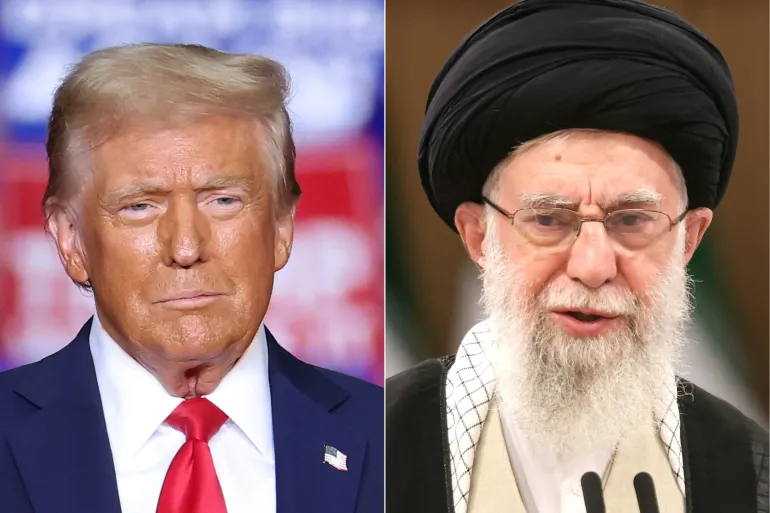
Donald Trump has boxed himself in by promising to ‘help’ Iran’s protesters. But he has few good options for military operations that he can control.
Illiberal systems often look most permanent just before they change. But moments of upheaval can also produce a different illusion: That the system is one dramatic external blow away from collapse. With Iran convulsed by unprecedented protests against the country’s leadership, it is tempting to imagine that the United States’ air power could deliver the final shove.
That temptation misreads how the Islamic Republic actually survives. Coercive cohesion is the cement of the system: The ability of parallel security and political institutions to keep acting together, even when legitimacy erodes. When that cohesion holds, the system absorbs shocks that would more conventional states would fall under.
Trump has also boxed himself in rhetorically. Having warned that if Iran “violently kills peaceful protesters”, the US would “come to their rescue”, he has had to signal credible military options even as he suggests diplomacy is preferable and hints that the killing is “stopping”. In practice, this oscillation appears to be less strategic ambiguity and more bargaining and indecision, encouraging every faction around him to believe it can still win the argument.
It is important to be clear about what Washington’s inner circle seems to want. The goal is not liberal democracy. The prize is a pragmatic Iran that can be drawn into a regional geo-economic framework, opened to business with the US, and nudged away from overreliance on China. That implies constraints on nuclear activity, some curbs on ballistic missiles, and a drawdown – real or cosmetic – of Iran’s support for the so-called “axis of resistance”. This is a transformation of posture, not a wholesale replacement of the Islamic Republic.
Air power can punish and signal. It can degrade specific facilities. It can raise the cost of repression by authorities. But it cannot reorganise a security sector, arbitrate succession, or deliver a behaviour change. And it cannot protect protesters from the air. Libya in 2011 remains the cautionary tale. Military force, at most, is a high-risk attempt to coerce Iranians to the negotiation table that will likely backfire.
The most plausible military scenario is limited standoff punitive strikes, using cruise missiles and long-range munitions against Iranian Revolutionary Guard centres or enabling infrastructure. This fits the “quick and clean” preference and can be framed as punishment rather than war. Its strategic downside is that it hands the Guards an “existential threat” narrative that can legitimise harsher repression, while raising retaliation risk through proxies, shipping disruption, and pressure on US bases in the Gulf. It can also reduce the chance of internal fragmentation by pushing rival factions to rally around the flag.
A leadership “decapitation” attempt is more cinematic and less credible. It is the most escalatory option, likely to unify hardliners, and still unlikely to collapse a networked system.


Stay Informed With the Latest & Most Important News
Previous Post
Next Post



-
 01Israel says it hits security headquarters across Tehran, as Iran attacks US sites in Dubai and Qatar
 -
 02US to withdraw troops from Syria as tensions mount with Iran
 -
 03Trump’s new battleship plan could transform the US Navy – or sink it
 -
 04US-Israel war on Iran: What’s happening on day 28 of attacks?
 -
 05Trump lands another big win with EU trade deal, but he can’t dodge the Epstein saga
 -
 06Iran nuclear sites left ruined in US and Israeli strikes but program ‘intact,’ deputy foreign minister
 -
 076 looming questions about the Iran war