

Now Reading: The US just took out two China-friendly leaders in two months. Why has Beijing done very little about it?
-
01
The US just took out two China-friendly leaders in two months. Why has Beijing done very little about it?
The US just took out two China-friendly leaders in two months. Why has Beijing done very little about it?


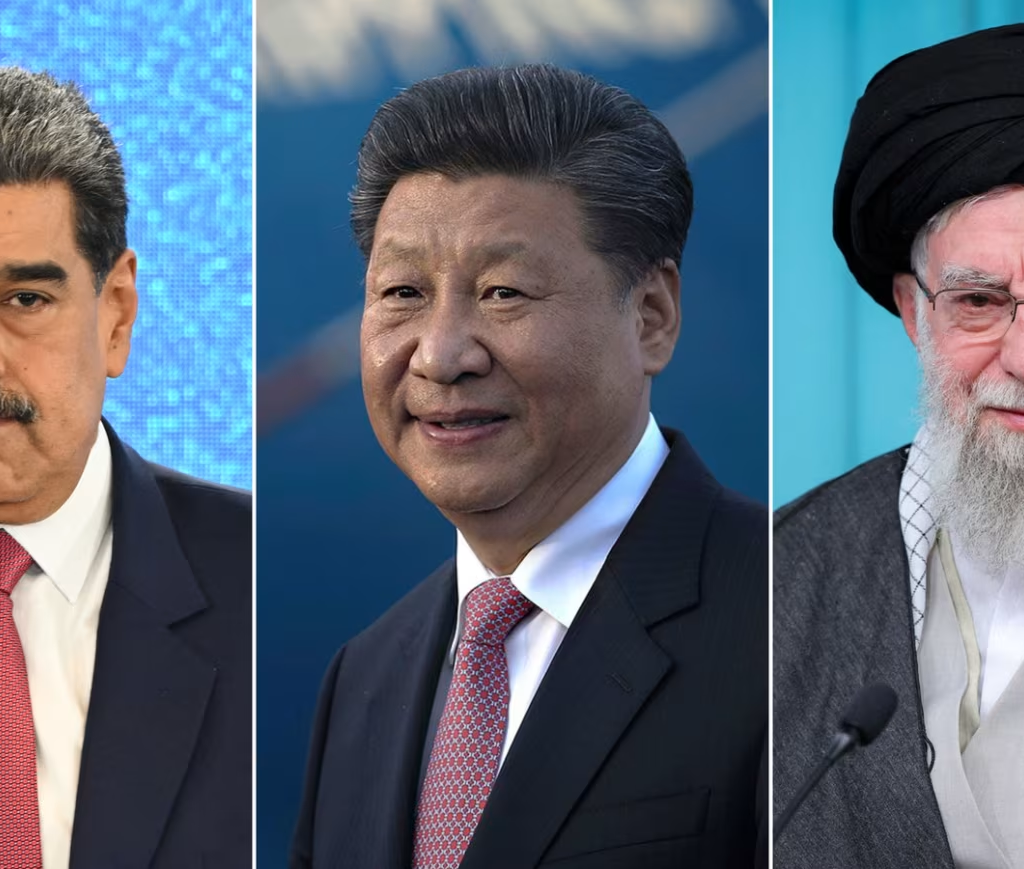
n quick succession, US President Donald Trump has taken out two of Beijing’s closest allies: Venezuelan President Nicolás Maduro and Iranian Supreme Leader Ali Khamenei.
The former is now in shackles in a New York detention facility after being snatched from Caracas by US special forces in an extraordinary overnight raid. The latter was killed in a daring daylight bomb drop in the center of Tehran in a joint US mission with Israel.
In the aftermath, China has responded with anger – condemning the capture or killing of a sovereign leader and the apparent US attempt at regime change while reaching out to Iran express its friendship. But Beijing has done little more than look on as its geopolitical rival shakes up the rules of engagement.
For Chinese leader Xi Jinping, a hard-nosed pragmatism is at play.
Iran ultimately ranks below his top priorities, including the stability of China’s relations with the US, particularly as it eyes the upcoming summit with Trump in Beijing later this month. China may also welcome Washington’s attention and military resources being diverted away from the Indo-Pacific, experts said.
“China is a fair-weather friend – long on words, short on risk,” said Craig Singleton, senior director for China at the Washington, DC-based Foundation for Defense of Democracies. “Beijing will speak up at the United Nations but steer clear of providing any significant support to Tehran.”
Though Beijing is the biggest buyer of Iranian oil, the country’s strategic importance to China is far more limited than many may assume. Military cooperation between the two has remained constrained, and trade and investment flows are eclipsed by those with several Gulf states, as Beijing seeks to maintain balanced ties across the Middle East.
China “sees no benefit in heightening tension with the US over Iran,” said William Yang, senior analyst at Belgium-based think tank International Crisis Group.
“It still attaches greater importance to maintaining the trade truce and overall stability in the bilateral relationship with the US, so it will not want to jeopardize the positive momentum that it has built with the Trump administration over the last year.”
Beijing’s calculations

China has long been Iran’s most important source of diplomatic and economic support. In addition to purchasing the bulk of Iran’s oil exports, Beijing has denounced what it calls “unilateral” US sanctions imposed on Iran, and supported Tehran’s insistence that its nuclear program is peaceful.
In recent years, China has elevated Iran’s global standing by bringing it into Beijing-backed groupings such as BRICS and the Shanghai Cooperation Organization, widening Tehran’s diplomatic space at a time of Western isolation.
But China has consistently steered clear of direct involvement in its partners’ conflicts, showing little appetite for wading into Middle Eastern security matters beyond protecting its own assets.

“Iran has been a longtime partner of the PRC, but it is far away and not existential or perhaps even critical to the PRC,” said Ja Ian Chong, a political scientist at the National University of Singapore, referring to China by its formal name, the People’s Republic of China.
But the limited support Beijing has offered Iran during two major military attacks over the last year raises questions about its reliability as a partner during adversity.


Related Posts
Stay Informed With the Latest & Most Important News
Previous Post
Next Post


-
 01Trump’s new battleship plan could transform the US Navy – or sink it
 -
 02Trump determined to advance Gaza ceasefire deal as Israeli forces dig in
 -
 03Trump says he ‘wasn’t worried’ during Washington press dinner shooting
 -
 04Nepal in a bind as US-China drone war reaches Everest
 -
 05US military kills 8 in latest attacks on vessels in eastern Pacific
 -
 06Five Al Jazeera journalists killed in Israeli strike in Gaza
 -
 07Week in Pictures: From deadly fire in Hong Kong to Russian attack on Kyiv