




Now Reading: The secrets behind the world’s fastest tennis serves
-
01
The secrets behind the world’s fastest tennis serves


WNN — If you’ve ever picked up a tennis racket and attempted to serve against an opponent, you’ll know just how hard a skill it is. It’s one thing to get the ball over the net and yet a whole other thing to even start thinking about speed and accuracy.
It’s a technique that quickly separates the professionals from the amateurs and a skill which has become increasingly important in the modern game.
Nowadays, both men and women are serving faster than ever before, with players regularly reaching service speeds that were once thought to be nearly impossible.
At this year’s Wimbledon, for example, fans witnessed the fastest serve in the tournament’s 148-year history, when Frenchman Giovanni Mpetshi Perricard unleashed a 153 mph rocket in his first-round match against Taylor Fritz.
Perricard is part of a new breed of players who weaponize their powerful asset to significant effect. The 21-year-old is the current world No. 36 but clearly has the power to one day challenge the very best.
“I’m not doing some special technique to have a big serve or a fast serve. I’m just serving like I’m supposed to do. We don’t train a lot to be honest, this part of my game. But I mean, it came naturally,” he said.
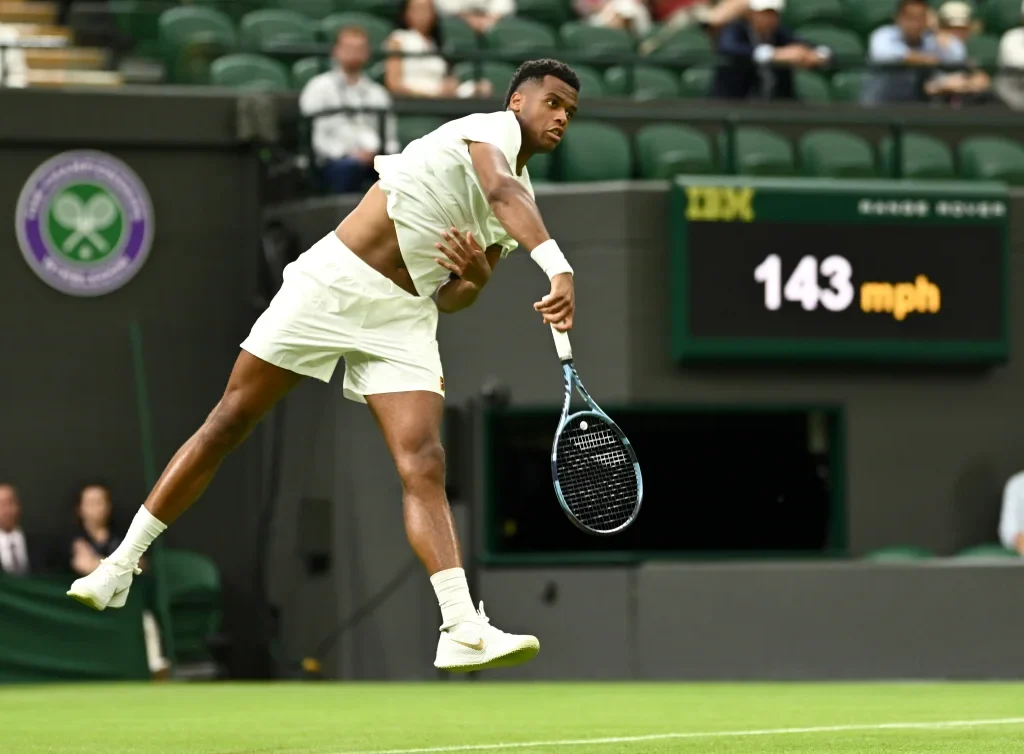
But while Perricard is nonchalant about his superior delivery, there is a science behind what makes his technique so successful.
Former tennis player and sports scientist Mark Kovacs has dedicated years to researching the biomechanics behind a tennis serve.

Then there is stage five into seven (acceleration, contact and deceleration), which addresses how fast the serving arm moves through the action.
“You hear people talk about a player having a live arm. In the scientific sense, you can actually put a number on that,” he says.
“A lot of coaches will say, ‘That guy’s just got a live arm. That’s why he’s able to serve hard but maybe doesn’t have the best technique.’
Height advantage
Kovacs agrees that there is a distinct correlation between height and a big serve, noting that the best players across the men’s and women’s games are now getting taller on average – a trend also seen across several other professional sports, such as basketball.
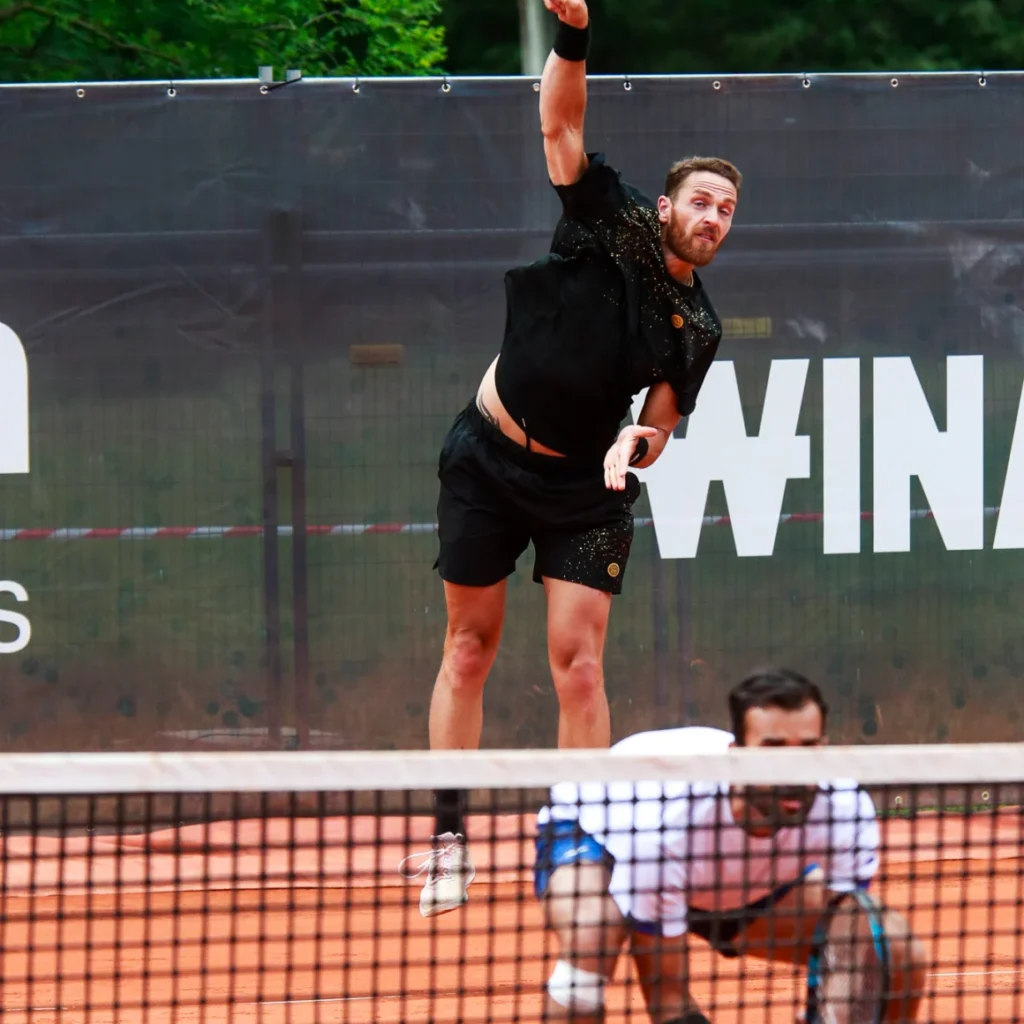
But both Kovacs and Olivetti say that height isn’t as big a benefit as some may think – it only gives you a higher ceiling to reach.
As someone who has always been taller than most of his opponents, Olivetti says technique always outweighs pure physical attributes and that’s why he has worked on his serving skills from an early age.
He also says that using the right equipment is important when it comes to finding a big serve, but explains that the search for a fast one sometimes comes at a cost.
For example, the racket he previously used, with his preferred string tension, helped create power on his serve but made returning from the baseline more difficult.
It’s sometimes tricky, he says, to find the balance.
What’s the limit?
Moving forward, Olivetti says that serve speed will continue to increase as players look for new ways to refine this vital aspect of the game.
Kovacs agrees and says the current crop of players are nowhere near reaching the limit of how fast a human being can serve a tennis ball.

While the biomechanics of a serve can offer players some control over improving their technique, Kovacs says that a number of external circumstances can influence the speed on any given day.
“There obviously is a limit, but that is under the assumption that everything stays the same from a standpoint of technology, balls, strings, rackets, and also temperature and environment plays a role,” he says.
“The reason you’ve seen these faster serves at Wimbledon this year is because the temperature was much hotter and drier the first few days, so the ball comes through the air a little bit faster. So you were getting three, four, five miles an hour more than you would typically see just because of weather conditions.”
With the serve becoming increasingly influential in the current game, the records being broken today will likely be surpassed again in the next decade.
And, perhaps more importantly, it’s still a source of pride and competition for all the big-hitters on tour.
“Yes,” Olivetti says smiling, when asked whether professional players even care about breaking new speed records.


Related Posts
Stay Informed With the Latest & Most Important News
Previous Post
Next Post






-
 01Hopes of return to diplomacy as US-Iran hold fire for third day
 -
 02US military spending on Iran conflict hits billions
 -
 03Putin takes aim at Zelenskyy in annual Q&A, says he won’t negotiate on land
 -
 04Why India’s RSS is lobbying the West amid attacks on minorities at home
 -
 05Houthis release video claiming to show downed Saudi F-15 fighter as Iran-backed rebels press their lightning advance
 -
 06An agreement on the Strait of Hormuz is taking shape – but not one Trump wants
 -
 07CDF Munir, Naqvi in Iran as part of Pakistan’s efforts for regional peace