




Now Reading: The atomic bomb marker inside your body
-
01
The atomic bomb marker inside your body

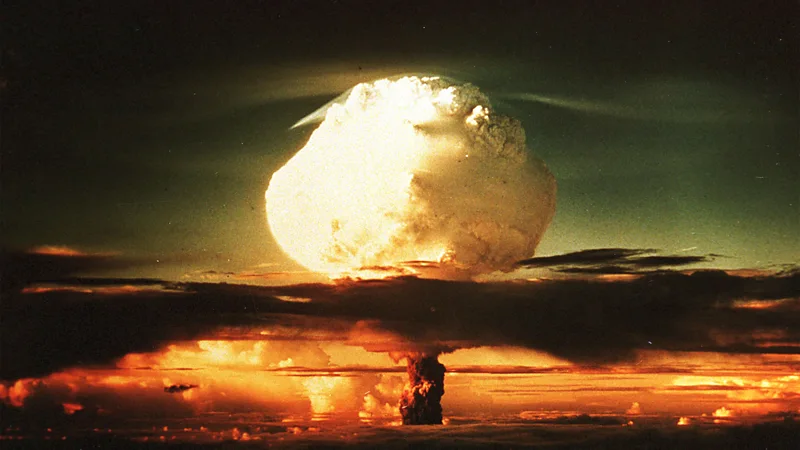
It is 80 years since the first nuclear weapon test – codenamed Trinity – detonated above the desert in New Mexico. Today the hidden legacy of nuclear bomb tests can still be found in our cells – and is proving surprisingly useful to scientists.
It’s in your teeth. Your eyes and your brain too. Scientists call it the “bomb spike” (or “bomb pulse”) – and for more than half a century its signature has been present inside the human body.
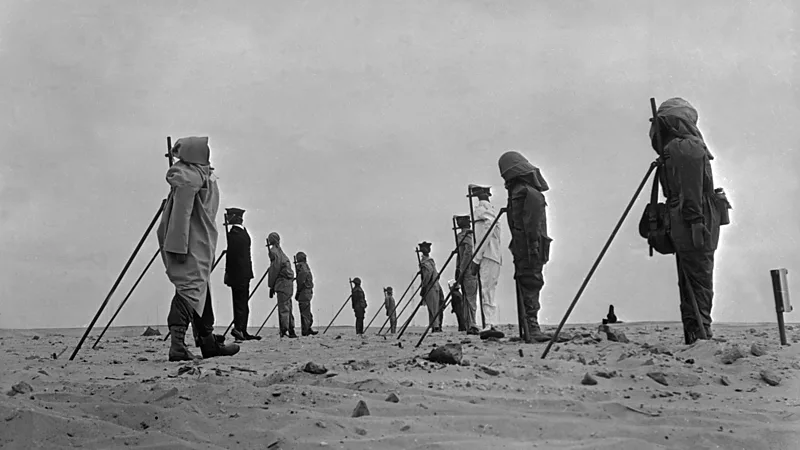
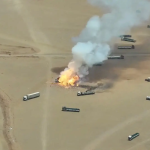
On 16 July 1945, scientists of the Manhattan Project detonated the first nuclear weapon, known as the Trinity test, in New Mexico. The 18.6kt explosion lit up the sky and sent a blast of searing heat across the desert as a fireball lofted high into the sky. In the days that followed, white flakes and dust rained down on areas downwind. A now de-classified report from the time warned that radioactive particles spread over an area of more than 2,700sq miles (6,993sq km). And this test was just the start of the atomic era.
Unlike the direct radioactive fallout from the explosions, the bomb spike is not harmful. In fact, it’s proven surprisingly helpful for scientists in recent years. Some have even gone so far as to describe it as the “mushroom cloud’s silver lining”.
Around the turn of the century, however, researchers realised that the bomb spike could help them use carbon-14 in a different way – and crucially it allows for dating within the past 70-80 years.

Ever since the peak in the 1950s, levels of the isotope in nature (and human beings) have gradually declined. Scientists can therefore analyse the proportions of carbon-14 in any organic substance that has exchanged atmospheric carbon since the tests, and specify the window in which it formed, down to a resolution of one to two years.
Australia, marking the start of the Ediacaran more than 600 million years ago – a period when the climate was periodically plunging into a “Snowball Earth”.
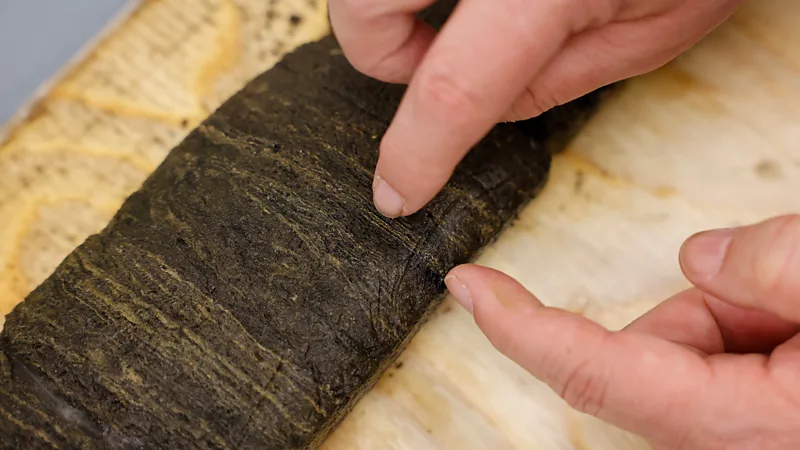
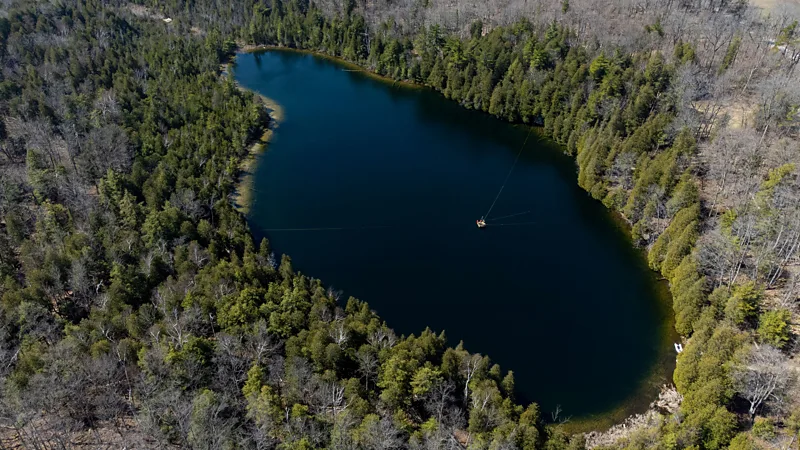
And the bomb spike will also last a long time, allowing geologists to see it in tens of thousands of years. “The radiocarbon signal will be detectable for about 60,000 years and is a fairly routine analysis,” says geologist Colin Waters of the University of Leicester, who chairs the AWG.


Related Posts

Stay Informed With the Latest & Most Important News
Previous Post
Next Post







-
 01Oil prices climb past $105 a barrel as war in Iran enters third week
 -
 02Asif warns Makkah defence pact could become operational following Houthi attacks on Saudi Arabia
 -
 03Trump’s Board of Peace holds Gaza reconstruction talks with UAE’s DP World
 -
 04Why did Israel jail journalist who witnessed Shireen Abu-Akleh’s killing?
 -
 05Trump says Iran regime change is ‘best thing that could happen’
 -
 06Mines, missiles and miles of coastline: Why Iran has the upper hand in the Strait of Hormuz
 -
 07Latest peace plan offers possible Ukrainian withdrawal from east, Zelensky says