



Now Reading: Is Turkiye Israel’s next target in the Middle East?
-
01
Is Turkiye Israel’s next target in the Middle East?
Is Turkiye Israel’s next target in the Middle East?


Following Israel’s Doha strikes, Ankara is increasingly on high alert over Tel Aviv’s regional ambitions.
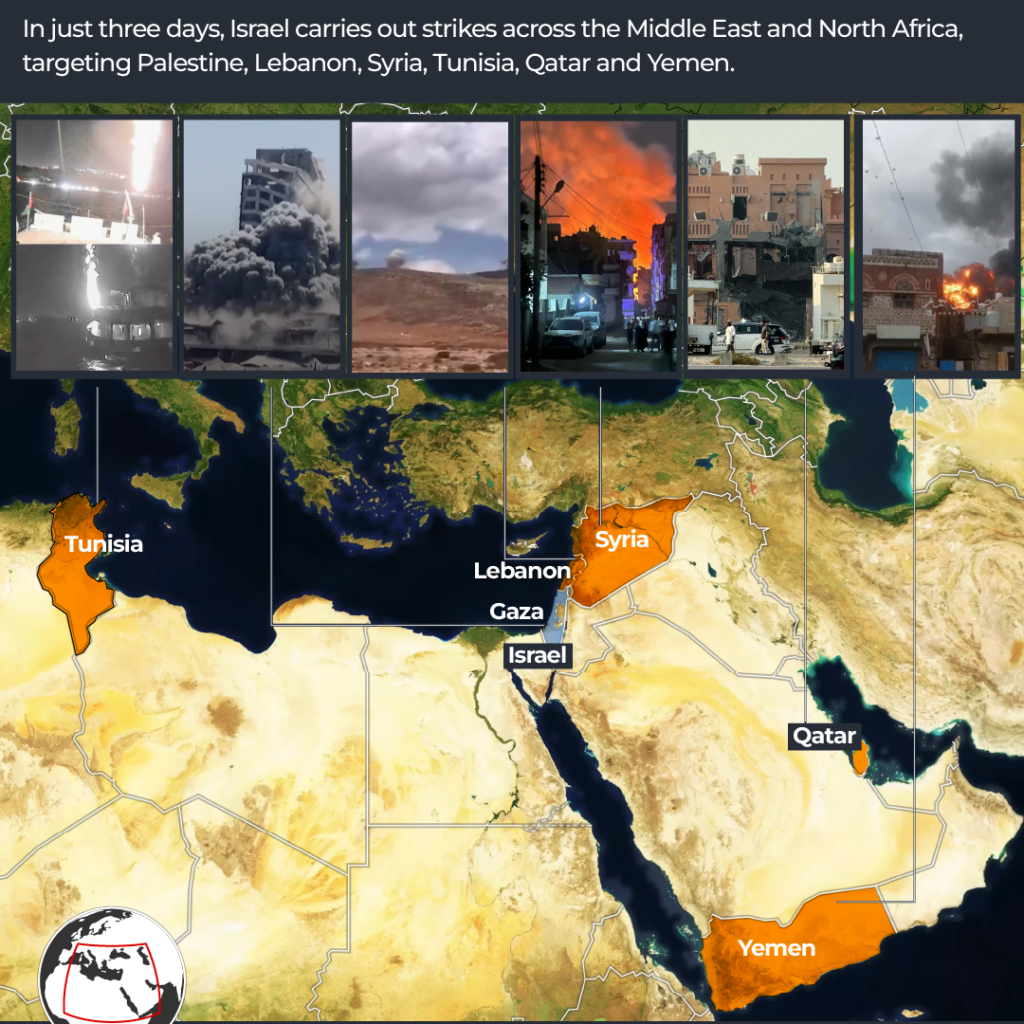
Istanbul, Turkiye – Just hours after Israel launched strikes last week against Qatar – a United States-designated “major non-NATO ally” and one of Washington’s closest Gulf partners – pro-Israel commentators quickly shifted their attention to Turkiye
On social media, Israeli academic and political figure Meir Masri posted, “Today Qatar, tomorrow Turkey.” Ankara responded sharply. In unusually harsh language, a senior adviser to President Recep Tayyip Erdogan wrote: “To the dog of Zionist Israel … soon the world will find peace with your erasure from the map.”
For months, pro-Israel media outlets have steadily escalated their rhetoric against Turkiye, portraying it as “Israel’s most dangerous enemy”.
Israeli commentators have also framed Turkiye’s presence in the eastern Mediterranean as a “threat” and its role in rebuilding post-war Syria as a “new rising danger”.
“In Ankara, this [anti-Turkish] rhetoric is taken seriously, with Israel seen as seeking regional hegemony,” Omer Ozkizilcik, non-resident fellow at the Atlantic Council, told Al Jazeera.
The strikes on Qatar also likely underscored Ankara’s doubts about US security guarantees as a NATO ally. Despite Doha’s special ally status with Washington, Israel faced no visible pushback from the US, leading to questions over whether the US would truly see any attack on Turkiye as an attack on itself, as the NATO charter dictates.
Regional hegemon
The sense that Israel is trying to become the region’s sole dominant power seemed to be confirmed in July when Tom Barrack, US ambassador to Turkiye and special envoy to Syria, made a startling admission: that Israel would prefer a fragmented and divided Syria.
“Strong nation-states are a threat – especially Arab states, [which] are viewed as a threat to Israel,” he said.
The subtext for Ankara was clear: Israel believes it needs to be the hegemon in the region to feel secure.


Related Posts
Stay Informed With the Latest & Most Important News
Previous Post
Next Post


-
 01Why Lebanon may hold the key to the future of the Iran war
 -
 02Trump ‘pretty sure’ of Iran deal, but can Pakistan-led efforts end the war?
 -
 03Zelensky says allies asked him to scale back attacks on Russian energy
 -
 04The Iran conflict is a boon for Russia’s ‘war machine.’ And it’s not just about oil
 -
 05India’s ‘unlawful use of force’ in Pakistan after Pahalgam attack violated rights to life, security: UN experts
 -
 06Putin invited to join Trump’s ‘Board of Peace’ for Gaza, Kremlin says
 -
 07Israel says it hits security headquarters across Tehran, as Iran attacks US sites in Dubai and Qatar