



Now Reading: India shuts down iconic Delhi protest site after three decades
-
01
India shuts down iconic Delhi protest site after three decades
India shuts down iconic Delhi protest site after three decades


For more than three decades, a stretch of road in central New Delhi was where Indians came to be heard, staging rallies to press their demands and hold those in power accountable.
Trade unions, retired soldiers, anti-corruption campaigners, women’s rights groups and student activists all protested beside the capital’s iconic 18th-century Jantar Mantar observatory, drawn by its location near the city’s commercial heart and the seat of political power.
But this week, the country’s most recognisable stage for public dissent officially lost its status as an authorised protest venue, prompting concerns among activists over shrinking democratic space.
“Jantar Mantar as a protest venue has been de-notified,” Delhi Police said in an order issued Monday.
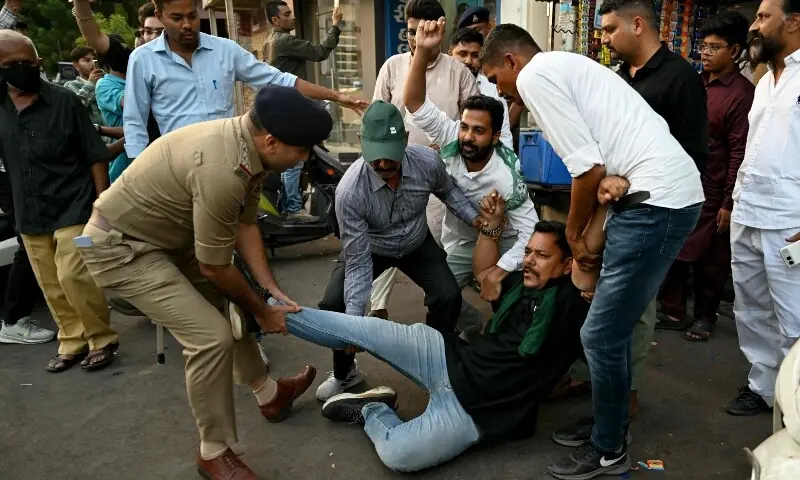
The youth-led group has mobilised thousands to take to the streets over a revision to electoral rolls that critics say could disenfranchise eligible voters, months after separate protests over exam irregularities forced the education minister to resign.
‘Spirit of resistance’
Jantar Mantar, meaning an instrument to calculate in Sanskrit, is designed for the observation of astronomical positions with the naked eye.
The roughly 1.6-kilometre (one-mile) street next to Jantar Mantar became synonymous with protest after being designated a demonstration site in 1993.


Related Posts


Stay Informed With the Latest & Most Important News
Previous Post
Next Post





-
 01Senior Turkish, Saudi and Pakistani officials to visit Iran for security talks
-
 02Trump says Putin may be helping Iran ‘a bit’
-
 03How the ‘absolutely incomprehensible’ shooting unfolded at Annunciation Catholic School
-
 04Children aged 5, 8 and 11 killed in US school shooting before suspect shot by bystander
-
 05Nine dead in missile attack on Israel as Iran strikes region
-
 06Muted response as Trump urges nations to escort ships through Hormuz Strait
-
 07World-renowned mountaineer Nirmal Purja among 10 killed in Pakistan avalanche