

Now Reading: How Pakistan became the Iran war’s indispensable mediator
-
01
How Pakistan became the Iran war’s indispensable mediator
How Pakistan became the Iran war’s indispensable mediator

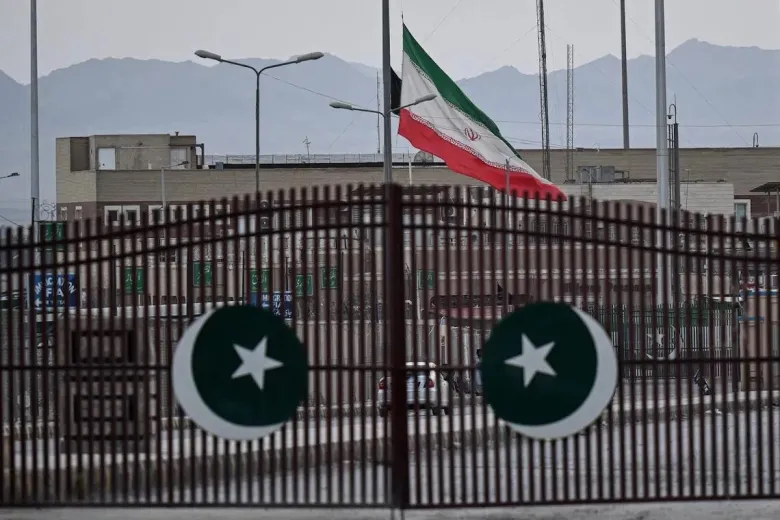
Not since Pakistan’s post-9/11 pivot has the country inserted itself into US strategic thinking with such speed or ambition
When Pakistani Field Marshal Asim Munir addressed Pakistan’s parliamentary security committee in March 2025, he asked a question that had been hanging over the country for years. “How long will we continue to sacrifice countless lives in the style of a soft state?”
The question was rhetorical. This week, it got an answer he could not have scripted. In the span of 72 hours this week, Munir held a direct phone call with Donald Trump, Prime Minister Shehbaz Sharif called Iranian President Masoud Pezeshkian and Pakistan pitched its own capital as the venue for what could become the most consequential diplomatic encounter of the decade.
A meeting between senior American and Iranian officials — Vice President JD Vance and White House envoy Steve Witkoff on one side, parliamentary speaker Mohammad Bagher Qalibaf on the other — is being reported, with Islamabad as the proposed stage.
For a country that was exchanging fire with India less than a year ago and is currently running military operations on its western border against Afghanistan, this is a remarkable act of positioning.
Not since Pervez Musharraf’s overnight pivot after September 11 has Pakistan inserted itself into the center of American strategic thinking with this speed or ambition. The difference is that in 2001, Washington came to Pakistan out of necessity. This time, Pakistan came to Washington with an offer.
Conventional wisdom has always held that Oman handles US-Iran engagement. It brokered the back channels that produced the 2015 JCPOA nuclear deal. Qatar built its entire foreign policy brand on being the region’s preferred mediation platform.
Both are small, stable, wealthy Gulf states with no axes to grind. In normal times, they are exactly what you want. But these are not normal times. This is crisis diplomacy under the pressure of active strikes, with a five-day window imposed by Trump’s postponement of attacks on Iran’s power grid.
The moment demands something different — an interlocutor with military heft, a direct line to Washington and enough proximity to Tehran to be credible without being captured. Pakistan uniquely fits that description.
Its structural advantages are real. Pakistan has the second-largest Shia Muslim population in the world after Iran — roughly 40 million people — giving it a sectarian proximity to Tehran that most Sunni-majority states cannot claim or feign. It signed a mutual defence pact with Saudi Arabia last year, lending it credibility in Riyadh and Washington simultaneously.
And unlike Oman or Qatar, Pakistan is a nuclear-armed state mediating between a nuclear aspirant and a nuclear superpower — it has skin in the game in a way that no Gulf trading state ever can. It is Munir who has cultivated a direct personal rapport with Trump, forged during the May 2025 India-Pakistan ceasefire, when the two men spoke repeatedly and Trump emerged publicly claiming credit for the deal.


Related Posts
Stay Informed With the Latest & Most Important News
Previous Post
Next Post




-
 01Iran begins laying mines in Strait of Hormuz, sources say
-
 02Critics slam Mexico’s gentrification protests as xenophobic. Activists say they’re fighting for their human rights
-
 03Iran’s new leader has never been tested. He now faces an existential battle
-
 04Putin takes aim at Zelenskyy in annual Q&A, says he won’t negotiate on land
-
 05How depleted weapons stockpiles could affect the Iran conflict
-
 06Dad shot daughter after ‘arguing about Donald Trump’
-
 07Maaz Sadaqat, Imran Randhawa star as Pakistan thrash Sri Lanka in second T20I to seal series