



Now Reading: Critics slam Mexico’s gentrification protests as xenophobic. Activists say they’re fighting for their human rights
-
01
Critics slam Mexico’s gentrification protests as xenophobic. Activists say they’re fighting for their human rights
Critics slam Mexico’s gentrification protests as xenophobic. Activists say they’re fighting for their human rights


The words “Get out of Mexico” are still visible on one shop window as protestors violently kicked in the glass pane. In another clip, “Kill a gringo” is spray-painted on a wall in Mexico City as demonstrators carried placards demanding western foreigners “stop stealing our home.”
These were some of the striking scenes at a mass protest last week against gentrification and the rising cost of living in the Mexican capital city, which some have blamed on an influx of foreigners from the United States and Europe.
While the demonstration was largely peaceful and reflected growing anger about inequality in the Mexican capital, those who vandalized stores in the city’s wealthier neighborhoods and used anti-immigration language were criticized by Mexican President Claudia Sheinbaum as being xenophobic.
“No to discrimination, no to racism, no to classism, no to xenophobia, no to machismo, no to discrimination. All human beings, men and women, are equal, and we cannot treat anyone as less,” Sheinbaum said at a Monday press conference.
Not a new phenomenon
Immigration is not the sole cause of Mexico City’s gentrification, which is a phenomenon that has happened for decades, say experts.
“In the debates, there’s a confusion about gentrification being when foreigners arrive. And that’s not true,” activist and lawyer Carla Escoffié said, noting that other causes include inequality, deficiencies in housing policy and land privatization.
“Not all foreigners gentrify, nor are only those who gentrify foreigners, nor is a significant migration process necessary for gentrification to occur. Gentrification is based on inequalities in such a way that it’s not the same thing,” she added.
But the arrival of short-term rentals like Airbnb, and remote work policies during the pandemic, have turbo-charged the gentrification debate in recent years.
“Since 2020, a new phase of gentrification has begun, one that has worsened,” said Escoffié. “It’s been driven by digital nomads and short-term rental platforms like Airbnb.”
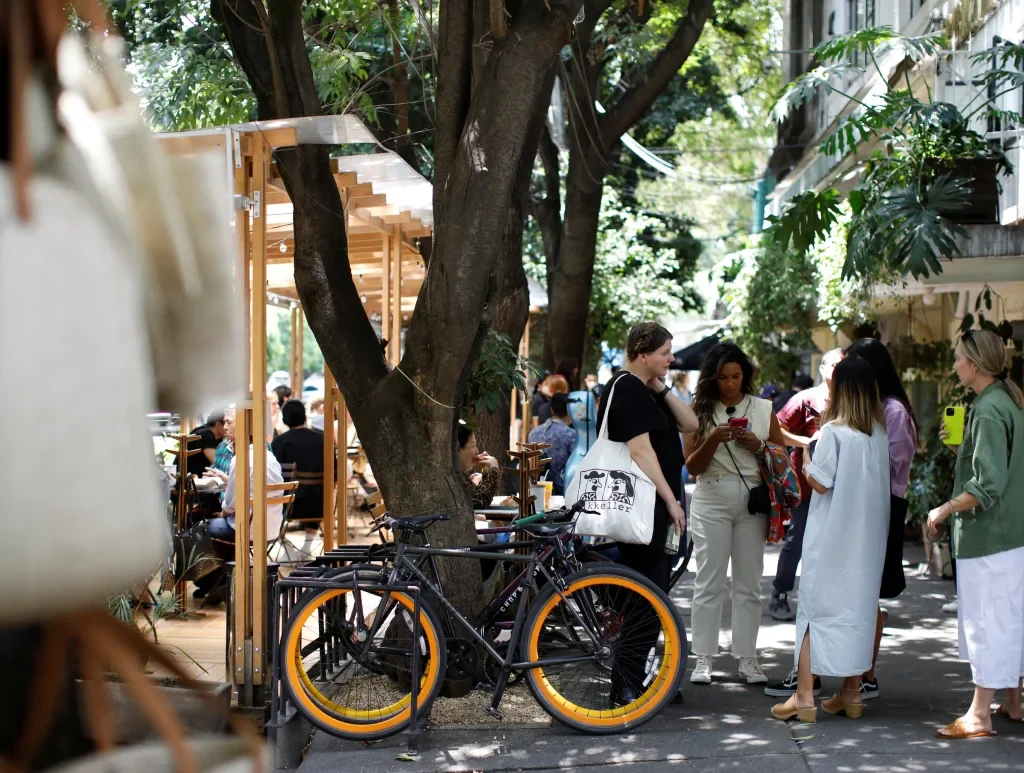
Airbnb defended its activities in Mexico City on Tuesday, saying it helped generate more than $1 billion in the local economy last year, and arguing that guests who booked accommodations also spent money on shops and services in the capital.
A global trend
Anger about gentrification is not unique to Mexico City. Local governments from tourist destinations in Europe, such as Spain’s Canary Islands, Lisbon and Berlin, have announced restrictions on short-term rentals in the past decade.
Barcelona’s leftist mayor, Jaume Collboni, said that by November 2028, the government will scrap the licenses of the 10,101 apartments currently approved as short-term rentals in the popular tourist destination.


Related Posts


Stay Informed With the Latest & Most Important News
Previous Post
Next Post





-
 01Spain’s Pedro Sánchez hits back at Trump threat to sever trade saying ‘no to war’
 -
 02Libya’s army chief killed in air crash in Turkey
 -
 03How Trump’s ‘big, beautiful bill’ frames the defining debate for 2026
 -
 04Why did US-Iran talks end without an agreement in Pakistan?
 -
 05Maxwell Hairston, the Buffalo Bills’ 1st-round pick, is accused of sexual assault
 -
 06Trump says he ‘wasn’t worried’ during Washington press dinner shooting
 -
 07‘Jaws’ turns 50. It changed pop culture and our perception of sharks