
Now Reading: ‘Her meaning contains multitudes’: Why the Statue of Liberty is at the heart of US culture wars
-
01
‘Her meaning contains multitudes’: Why the Statue of Liberty is at the heart of US culture wars
‘Her meaning contains multitudes’: Why the Statue of Liberty is at the heart of US culture wars


Controversy over an Amy Sherald painting of the Statue of Liberty reveals divides over US national symbols, joining debates that have centred on the statue since it was first unveiled.
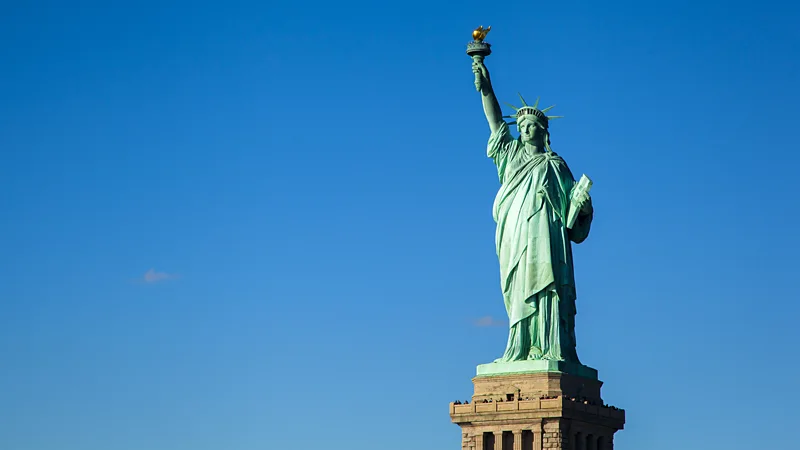
So fixed is our focus on the radiant points of her spiky crown and the upward thrust of her flickering lamp, it is easy to miss altogether the shackles of human enslavement that Lady Liberty – who is at the centre of a fresh skirmish in the US’s accelerating culture wars – is busy trampling underfoot. Her meaning contains multitudes. It pulls her in many directions.
Messily inspired, as all great art is, by a mixture of sources – from the Roman goddess Libertas, to the Greek sun god Helios, to the multifaceted Egyptian goddess Isis (who fascinated the sculpture’s creator, the French artist Frédéric-Auguste Bartholdi) – the Statue of Liberty seems hardwired for debate. She boldly embodies the one straightforward truth about cultural symbols: their truths are never straightforward.
Earlier this month, Sherald, best known until now for her 2018 official portrait of First Lady Michelle Obama, was advised that her work, Trans Forming Liberty, might upset US President Donald Trump – who in January issued an Executive Order recognising two sexes only – male and female – and therefore should not be included in her upcoming exhibition at the federally funded Smithsonian’s National Portrait Gallery in Washington, DC. Rather than contemplate removing the work, Sherald decided to cancel the show altogether, citing “a culture of censorship”.
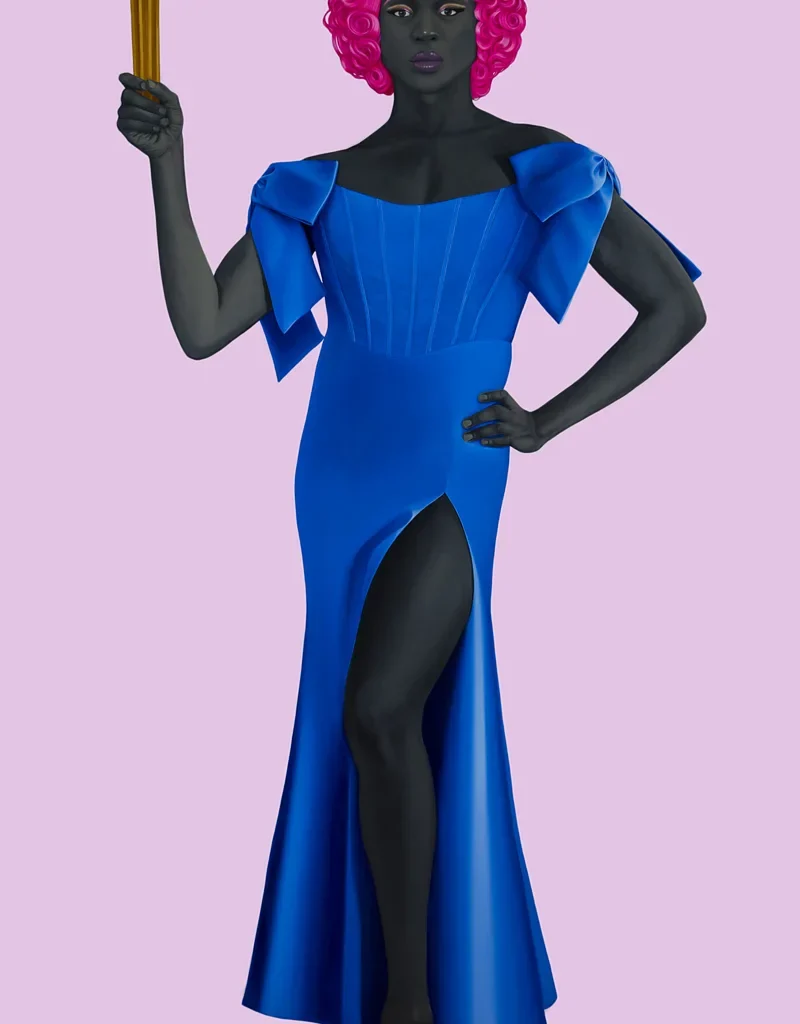
While neither Trump nor anyone in his administration has, as yet, publicly condemned Sherald’s painting or its representation of a black transgender woman, the organisers of her scheduled exhibition, which was due to open on 19 September, had reason to fear imminent repercussions to its funding should the work go on display. In March, barely two months into his second term, Trump


Stay Informed With the Latest & Most Important News
Previous Post
Next Post



-
 01‘High probability’ Trump and Xi will meet this year, Rubio says
 -
 02France seizes suspected Russian ‘shadow fleet’ tanker
 -
 03What could Mexico cartel violence mean for World Cup?
 -
 04Malala becomes second Pakistani to have her portrait displayed at the University of Oxford
 -
 05UAE denies Netanyahu visited in ‘secret’ during US-Israel war on Iran
 -
 06Nvidia shares dip as chipmaker’s earnings come in good — but not amazing
 -
 07Saudi Arabia signs mutual defence pact with nuclear-armed Pakistan