



Now Reading: Yemen presidency announces military drive to retake all territory seized by Houthis
-
01
Yemen presidency announces military drive to retake all territory seized by Houthis
Yemen presidency announces military drive to retake all territory seized by Houthis

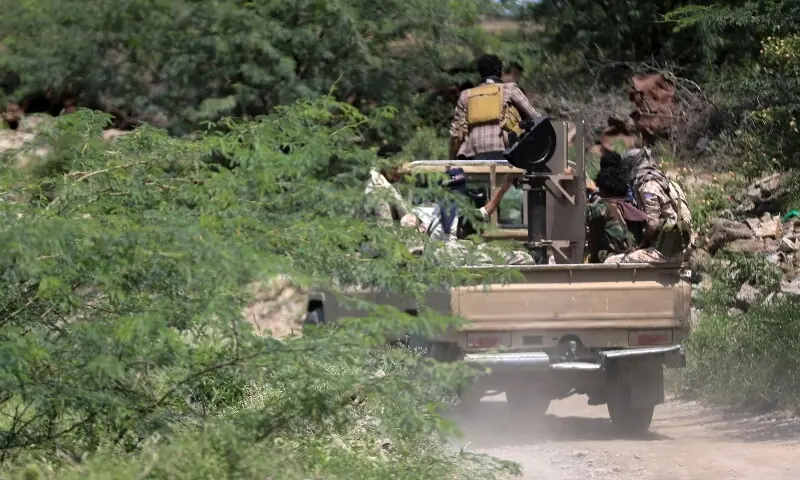
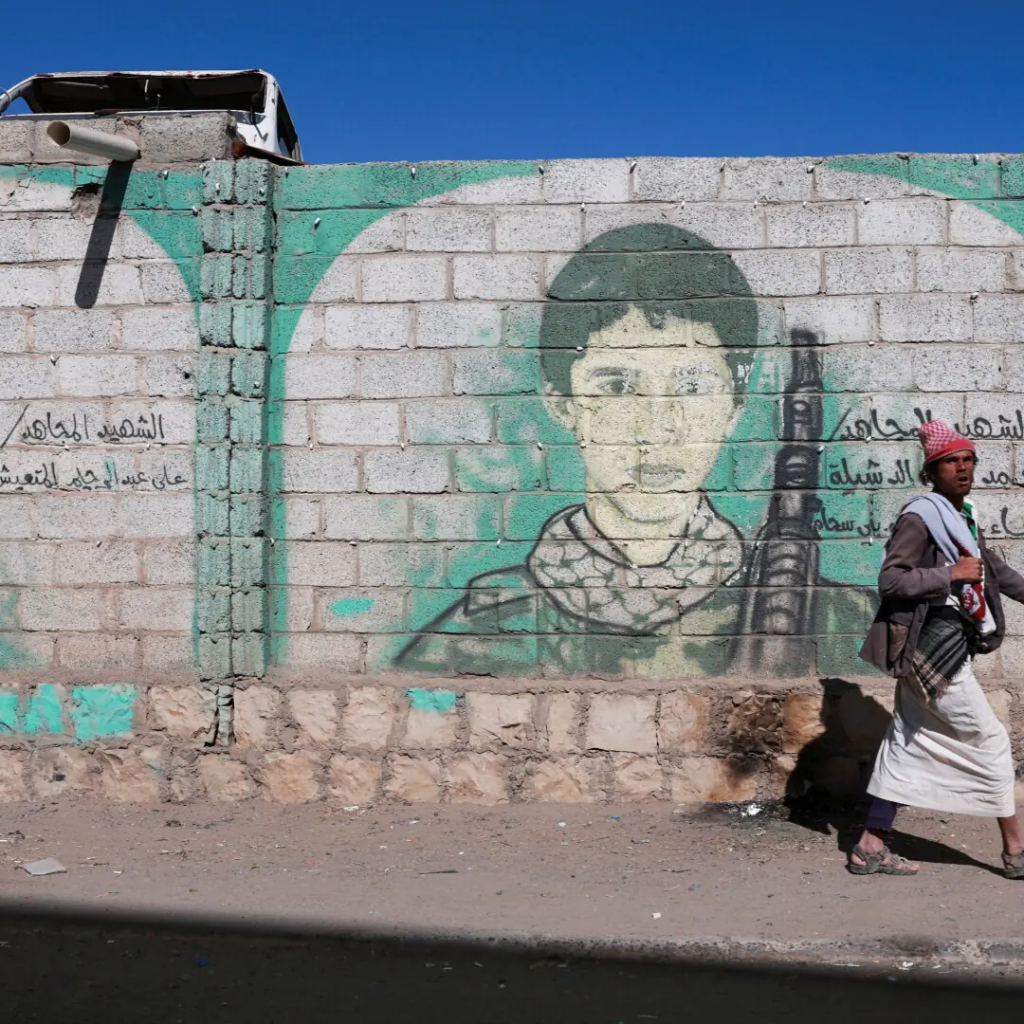
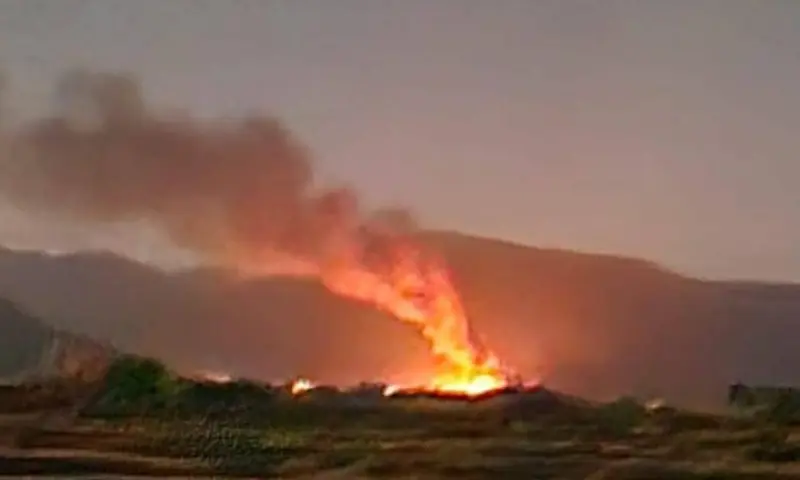
Yemen’s leader announced on Sunday the start of a new military operation to retake all territory held by the Houthis, even as the group made fresh gains on the ground, effectively encircling a government-held city.
The announcement sets an ambitious goal for the embattled government, which recently lost swathes of the country’s Red Sea coastline and areas around the Bab al-Mandab strait — a chokepoint for international shipping — after a lightning offensive by Houthis. Yemen’s government has struggled to roll back the surge, even with the military support of Saudi Arabia, where the Houthis said they had attacked oil infrastructure in the capital yet again on Sunday. “I announce today the start of military operations to retake the remaining territories of the republic and extend the authority of the state and its institutions across the entire national territory,” Rashad al-Alimi, the head of Yemen’s presidential council, said in a statement. Alimi called on all the armed forces “to begin carrying out their assigned missions, in accordance with the approved plans, until the country is liberated from the grip of the Houthi terrorist militia”.
The statement came just hours after the Houthis cut a vital supply route linking the besieged city of Taiz with the government’s interim capital Aden, according to four security sources.
The battle for Taiz is taking place on several fronts, including highlands overlooking coastal areas recently seized by the Houthis. Taiz is Yemen’s third-largest city after Sanaa and Aden.
“We were informed that the Houthis had taken control of the al-Safiya area, where they cut the main road and took control of the police station,” a police source in the area told AFP.
Three sources with the Yemeni military also confirmed Houthi control over the area and the supply route, with traffic along the road halted and the group now surrounding Taiz city.
The military sources added that fighting in the area was ongoing.
Sources from both sides told AFP on Sunday that fighting in and around the western province of Taiz has killed more than 70 people over the past day.
Sources from the internationally recognised government reported that 34 government troops were killed — 20 on the edge of Taiz province in neighbouring Lahj — while Houthi military sources said 39 of their fighters were killed in fighting across Taiz and in border areas with Lahj.
Taiz city itself remains under the control of government forces but has long been besieged from the north, east and west by Houthi fighters and remains one of the main fronts in Yemen’s long-running civil war.
“They’ve achieved the military objective of isolating Taiz from Aden, even if they haven’t fully taken control of it,” Farea Al-Muslimi, research fellow at the Chatham House think-tank, told AFP.
Muslimi also downplayed expectations over what the coming government offensive might accomplish. “In my opinion, it’s meaningless,” he added.
But Taiz residents vowed to resist any Houthi advance.
“We will defeat and crush anyone who enters the city of Taiz. We will not abandon Taiz,” resident Zakaria Al-Dhubhani said.
“This is a message to the Houthis: I swear to God, we will not allow you to advance a single inch into the city.”
Saudi attacks
Following several years of relative calm, Yemen’s civil war reignited in July against the backdrop of the wider conflict in the Middle East.
They came a day after Yemen’s government said its forces struck Houthi targets around the country, including in the capital Sanaa, the northwestern governorate of Saada and the group’s positions near Taiz in the southwest.
The Yemeni government’s air capabilities, however, are limited, and the Saudi-led coalition has long been the primary force carrying out airstrikes against the Houthis.
Experts believe the recent operations have most likely been conducted by Saudi warplanes as well.
Yemen is one of the poorest countries in the world and remains gripped by a vast humanitarian crisis that has unspooled since the civil war broke out in 2014.
That year the Houthis seized the capital Sanaa from the Saudi-led government, before going on to take control of much of the country’s north, with Riyadh’s international coalition intervening the following year.


Related Posts

Stay Informed With the Latest & Most Important News
Previous Post
Next Post




-
 01Pakistan seeks oil deal with Russia as energy ministries hold talks
-
 02Mass displacement in Gaza as Israeli ground invasion intensifies
-
 03China hits US with sanctions, drone export curbs ahead of Xi visit
-
 04Army commander convicted of Guinea stadium massacre dies in prison
-
 05North Korea’s Kim unveils homes for families of fallen soldiers
-
 06‘A gasp of wonderment escaped our lips’: The dazzling discovery of Tutankhamun’s tomb
-
 07Trump’s abduction of Maduro escalates concerns over potential war with Iran