

Now Reading: Why India’s RSS is lobbying the West amid attacks on minorities at home
-
01
Why India’s RSS is lobbying the West amid attacks on minorities at home
Why India’s RSS is lobbying the West amid attacks on minorities at home


Hate speech against religious minorities in India rose last year. Experts say far-right RSS is doing ‘damage control’.
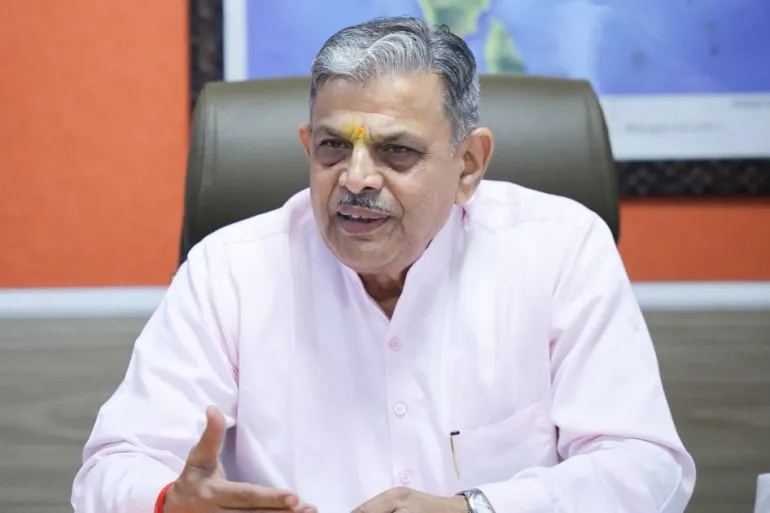
India’s Rashtriya Swayamsevak Sangh (RSS), the ideological fountainhead of the Hindu far right, says it is organising visits to the United States and other Western countries to bolster its public image globally and dispel claims it is involved in violence against religious minority groups in India.
The visits announced on Tuesday come amid international criticism regarding minority rights in India and a few months after a US federal agency published a report accusing the group of carrying out acts of violence against minorities for decades.
What is the Rashtriya Swayamsevak Sangh? The RSS is a right-wing Hindu volunteer organisation founded in 1925 by physician and Hindu nationalist Keshav Baliram Hedgewar in Nagpur, modern-day Maharashtra. Rashtriya Swayamsevak Sangh, sometimes called the Sangh for short, is Hindi for National Volunteer Organisation.
The RSS describes itself as a “Hindu-centric civilisational, cultural movement” that aims to “carry the nation to the pinnacle of glory”. It leads a network of more than 2,500 right-wing Hindu organisations called the Sangh Parivar, Hindi for RSS family.
“RSS is known as a fascist organisation because if you look at the writings of the first ideologues of RSS, they bring inspiration from Mussolini and Hitler,” Apoorvanand, a Hindi professor at the University of Delhi who writes literary and cultural criticism,
Does the RSS have ties to the government?
The RSS is often described as the ideological mothership of India’s ruling Bharatiya Janata Party (BJP). The BJP was formed in 1980 by former leaders of the Bharatiya Jana Sangh (BJS), including Hindu nationalist leader and poet Atal Bihari Vajpayee, after their split from the Janata Party coalition.
The BJP first came to power briefly in 1996 with Vajpayee as prime minister, but he resigned after 13 days when he failed to gain support for his government from a majority of members of parliament. He won again in 1998 and served as prime minister for 13 months before losing a no-confidence vote. Vajpayee later served a stable term from 1999 to 2004.
Current Prime Minister Narendra Modi, who has been a member of the RSS since 1972, began his first term in 2014, marking the first time the BJP had won a single-party majority in the Lok Sabha, the lower house of the Indian Parliament. In June 2024,
Are hate crimes against minorities on the rise in India?
In 2025, incidents of hate speech against minorities in India, including Muslims and Christians, rose by 13 percent, according to the India Hate Lab, a United States-based research group. The majority of these instances occurred in states and union territories governed by the BJP.
Since 2015, a number of Muslims in India have been lynched by mobs during disputes about herding cattle or over allegations of eating beef. They have also fallen victim to targeted attacks.
The SIR, or special intensive revision, is a revision of voter rolls that began last year. Critics of the exercise have said it has disproportionately removed Muslims and other minority communities from the rolls.
“What RSS General Secretary [Dattatreya] Hosabale has been saying, including denying any persecution of minorities, directly contradicts facts on the ground. It contradicts research and data from numerous international human rights organisations, including ours,” Naik said.

How is the RSS lobbying the West?
Hosabale said at a rare briefing with foreign media in New Delhi on Tuesday that he had been speaking to gatherings in the US, Germany and the United Kingdom to “dispel certain misgivings and misconceptions about the RSS”.
Speaking from the new 12-storey RSS office in New Delhi, Hosabale said the main allegations against the RSS were that the organisation was a “paramilitary organisation” that promotes “Hindu supremacist things” and “others have become second-class citizens”.
“The fact is entirely different,” he said.
Hosabale met with academics, policymakers and business leaders during his trips to the UK, US and Germany in April.
He spent six days in London and Rugby in central England, engaging with organisations including Chatham House, the Royal Institute of International Affairs and the International Centre for Sustainability in the City of London, according to the RSS website.
The website said a dinner with members of parliament was held that was attended by representatives of the Conservative Party, the Labour Party and the Liberal Democrats.
After this, he visited the US, where he engaged with the Indian American community in multiple cities over 10 days. Hosabale also conducted discussions with the Hudson Institute, a Washington, DC-based conservative think tank.


Related Posts

Stay Informed With the Latest & Most Important News
Previous Post
Next Post





-
 01Four years on, Russia’s war in Ukraine has transformed conflict and shattered global security
 -
 02Will a dice-playing robot eventually make you tea and do your dishes?
 -
 03Trump’s Board of Peace holds Gaza reconstruction talks with UAE’s DP World
 -
 04India to Iran: How two wars shaped the rise of Pakistan’s Asim Munir
 -
 05New front in US-Iran war escalates as Houthis fire at Saudi oil facilities
 -
 06Israeli strikes kill 19 Palestinians near Gaza’s last functioning hospitals
 -
 07Trump now says 10 aircraft shot down during Pak-India conflict