



Now Reading: Trump’s blockade threat raises risks and leaves predicaments unchanged
-
01
Trump’s blockade threat raises risks and leaves predicaments unchanged
Trump’s blockade threat raises risks and leaves predicaments unchanged


After a diplomatic team led by US Vice-President JD Vance tried, and failed, to reach a negotiated agreement to end the war with Iran on Saturday, President Donald Trump had to decide his next move.
That came on Sunday morning, in a series of Truth Social posts.
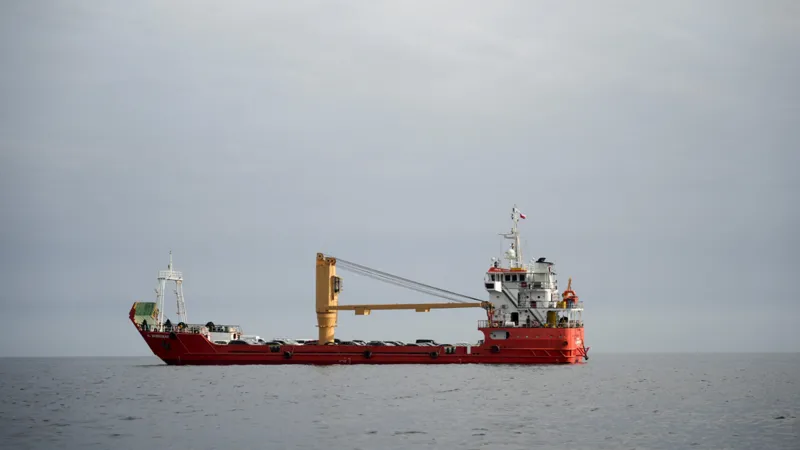
The US will impose a naval blockade of Iran, he wrote. “No one who pays an illegal toll will have safe passage on the high seas,” he wrote.
He also said that the US would continue clearing mines from the Strait of Hormuz to ensure a safe passage for allied shipping. The US military, he added, was “locked and loaded” and prepared to resume attacks against Iran at an “appropriate moment”.
He went on to say that while progress had been made in the 20-hour negotiations in Islamabad, Iran would not meet the US demand that it abandon its nuclear ambitions.
That view was contradicted somewhat by a US official familiar with Vance’s negotiations, who spelled out a much longer list of disagreements – including on Iran’s control of Hormuz and its support for regional proxies, like the Houthi rebels in Yemen and Hezbollah in Lebanon.
While Trump’s latest posts didn’t have the apocalyptic bluster of last week’s threat to end Iranian civilisation, they pose a number of new challenges – and risks – for the American side.
Will mine-clearing activities place American naval vessels at greater risk of Iranian attacks? How would the US determine who paid Iran a toll? Will the US use force on foreign-flagged ships that ignore the blockade? How will nations that depend on Iranian oil, like China, respond? Will the move, intended to choke off Iran’s primary income stream, drive the price of oil to even higher levels?
There are no clear answers.
He could continue to ratchet up the US attacks on Iran, possibly doing long-term damage to the nation’s civilian infrastructure, adding to a humanitarian crisis and further destablising the global economy.
Or, he could back away from a war that has always been unpopular among the American public and is beginning to frustrate even some of Trump’s supporters, who believed his promises to avoid extended foreign conflicts and Middle East entanglements.
A new CBS poll suggests that most Americans (59%) feel the war is going somewhat or very badly for the US.
Many believe the key US objectives – such as keeping open the Strait of Hormuz, securing greater freedom for the Iranian people and permanently ending Iran’s nuclear programme – remain unmet. Overwhelming bipartisan majorities feel it’s important for the US to achieve these goals.
Nearly a week has passed and, despite American claims of victory, the predicaments facing the president have not changed.
Trump told Fox News on Sunday morning that Iran would ultimately give the US “everything” it wants. He added that while oil prices might be the same or higher in the months ahead, he believed the US economy would hold up.


Related Posts
Stay Informed With the Latest & Most Important News
Previous Post
Next Post


-
 01Uzbekistan’s Center of Islamic Civilization is a space of enlightenment and inspiration
 -
 02Trump’s Board of Peace holds Gaza reconstruction talks with UAE’s DP World
 -
 03FOM condemns Indian minister’s remarks on Kashmir issue, warns against underestimating resolve to thwart ‘any adventurism’
 -
 04Hunkered at Mar-a-Lago, Trump makes his club a makeshift Situation Room
 -
 05How to stop Israel from starving Gaza
 -
 06How much cash is the US raising from tariffs?
 -
 07‘Technical fault’: Driverless car crashes into police van in Islamabad