



Now Reading: Netanyahu is the ultimate survivor. But can he survive this time?
-
01
Netanyahu is the ultimate survivor. But can he survive this time?
Netanyahu is the ultimate survivor. But can he survive this time?



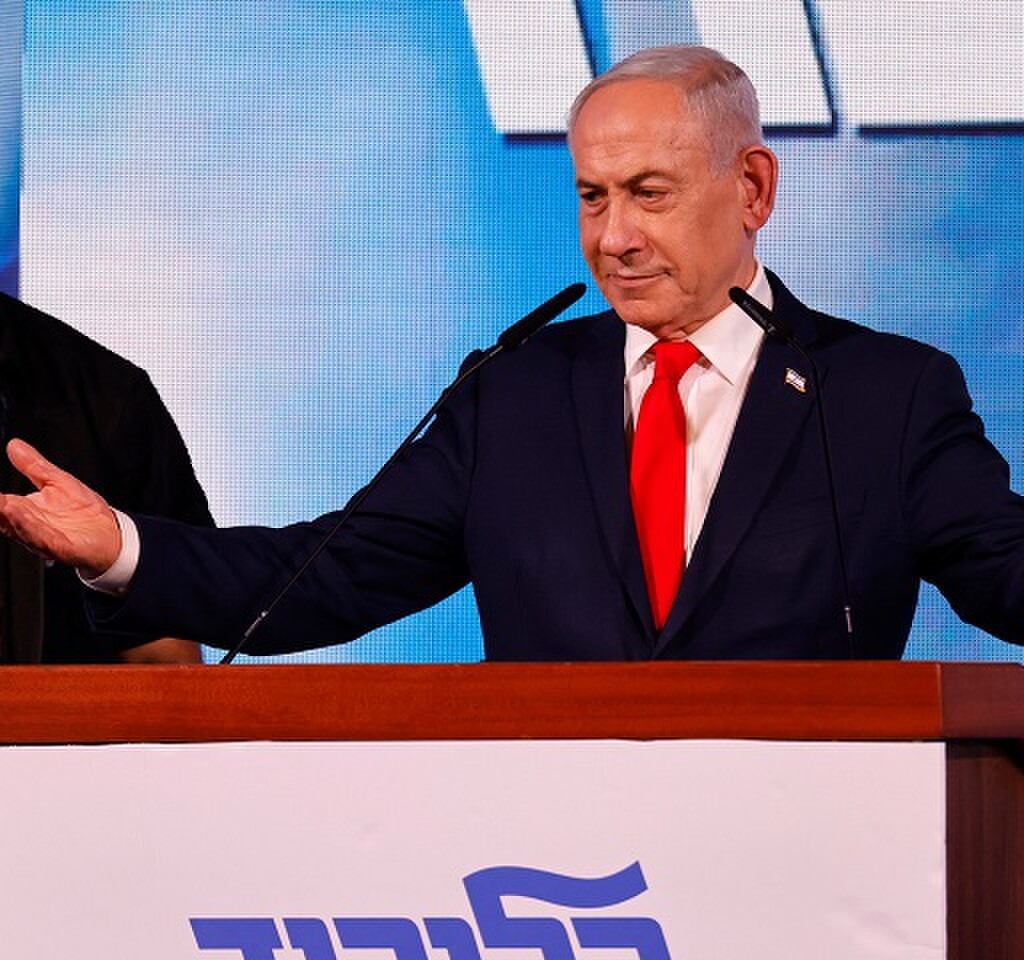
In a political career that has spanned more than three decades, Benjamin Netanyahu has been written off too many times to count, only to prove the obituaries were penned prematurely. Israel’s election results this week appear to give the prime minister’s opponents a chance to end his run, but in the country’s ruthless political system, it’s no guarantee. By Wednesday night, most votes had been counted. But there is no clear winner for Israel’s top post, setting up weeks — possibly months — in which Netanyahu’s political survival remains on the line.
With the vote counting nearing its conclusion, Netanyahu’s Likud party remains the largest party in the 120-seat parliament, known as the Knesset, with an estimated 26 seats. But his right-wing bloc has lost its majority, set to win only 53 seats, short of the 61-seat majority needed to govern.
The Arab parties On paper, the opposition holds roughly 67 seats, but that arithmetic is fractured by ideological, national and personal rivalries. Netanyahu’s main challenger, Gadi Eisenkot, won 21 seats, but the Jewish opposition parties total only 48, well short of victory. To reach 61, they would need the support of two Arab parties, Raam and the Joint List, which are projected to win a record 19 seats between them. Analysts say that record turnout by Arabs or Palestinian citizens of Israel was in part a backlash to four years of a far-right national security minister under whom crime in the Arab community soared.
This is where the math gets complicated. Raam is an Islamist party that draws heavily from Israel’s Bedouin community. Its leader, Mansour Abbas, became the first Arab politician to join an Israeli government following the country’s 2021 election. The Joint List, projected to be the bigger Arab party, combines several smaller parties: the Communist Hadash, secularist Taal and nationalist Balad factions.
On Wednesday, Yair Golan, leader of the left-wing Democrats party, called on his partners to count the Arab parties as part of the bloc, rejecting what he called Netanyahu’s “racist division between Jewish and Arab votes.” But two of Eisenkot’s right-wing allies, Naftali Bennett and Avigdor Liberman, have opposed any government that depends on the Arab parties. (They have not issued a statement on the issue since polls closed.)
The Joint List said Wednesday that it was ready for political cooperation and willing to do “do everything in its power to bring Netanyahu’s rule to an end.”
What will Netanyahu do?
A source close to Netanyahu said his main post-election goal is to delegitimize and therefore prevent the Jewish-Arab political cooperation that could send him home.

The opposition fears that Netanyahu could use a security crisis to stall or block a new government. Before the election, Netanyahu had pressed Trump to launch a joint attack on Iran, but Washington held off, partly because Israeli military chief of staff Eyal Zamir warned it could disrupt the vote.


Related Posts

Stay Informed With the Latest & Most Important News
Previous Post
Next Post






-
 01India crush New Zealand to win third T20 World Cup title
-
 02Zelenskiy accuses US of inaction as Russian strikes kill over 70 in two days
-
 03US Congress members visit Denmark as Trump’s pressure on Greenland rises
-
 0410 India-sponsored terrorists killed as bid to undermine state’s writ in Gwadar foiled: ISPR
-
 05‘Cockroach Janta Party’: Top Indian judge’s comment sparks satire, protest
-
 06Ukraine says Starlink still restricted after Trump says limits lifted
-
 07Porsche shares plunge after announcing EV rollout delay