



Now Reading: Calls are mounting to ban Germany’s far-right AfD party – despite it being more popular than ever
-
01
Calls are mounting to ban Germany’s far-right AfD party – despite it being more popular than ever
Calls are mounting to ban Germany’s far-right AfD party – despite it being more popular than ever


The far-right Alternative for Germany (AfD) is now Germany’s largest opposition group and even topped several opinion polls – briefly putting it ahead of now-Chancellor Friedrich Merz’s center-right party – in the weeks after February’s federal election. At the same time, the AfD is facing growing calls for an outright ban, most recently from another major political party. In May, the country’s domestic intelligence agency formally classified the AfD as an extremist entity that threatens democracy. In a 1,100-page report, the Federal Office for the Protection of the Constitution, or BfV, also laid out its findings that the party was racist, anti-Muslim, and devaluing of “entire segments” of Germany’s population. That move, which enables the BfV to better monitor the group , has reignited attempts to impose a ban, despite the party claiming a significant 20.8% of the vote in February’s national election – the best performance by a far-right party in the country since World War II. The AfD has also enjoyed very vocal support from the Trump administration, with Tesla billionaire Elon Musk – who has since left his position in the Department of Government Efficiency (DOGE) – urging Germans to vote for the party in the run-up to the election. More recently, both US Vice President, JD Vance, and Secretary of State Marco Rubio have criticized Germany’s decision to classify the AfD as extremist. On Monday, the center-left Social Democratic Party (SPD), which is currently serving as the junior coalition partner in Berlin’s conservative-led government, voted unanimously to begin efforts to outlaw it.

Legal basis?
Yet the legal path to banning the AfD is lengthy – and largely unprecedented.
Set up to avoid a repeat of Nazi rule, Germany’s political system operates on the basis of streitbare Demokratie, or “militant democracy,” meaning it is a democracy “determined and able to defend itself.”
In other words, the German state can actively defend itself against internal threats to its democratic principles and constitutional order, including through the banning of political parties.
However, two criteria must be met by Germany’s Federal Constitutional Court to form a legal basis for a ban.
Firstly, the party in question must be found to work against the country’s free democratic order, demonstrating an “actively belligerent, aggressive stance.” Secondly, the party must be popular enough to pose a tangible threat to democracy, a provision created in 2017 and called “potentiality.”
Parties found to meet the first criterion, but not the second, can be prohibited from accessing public campaign financing, but are allowed to continue with other activities.
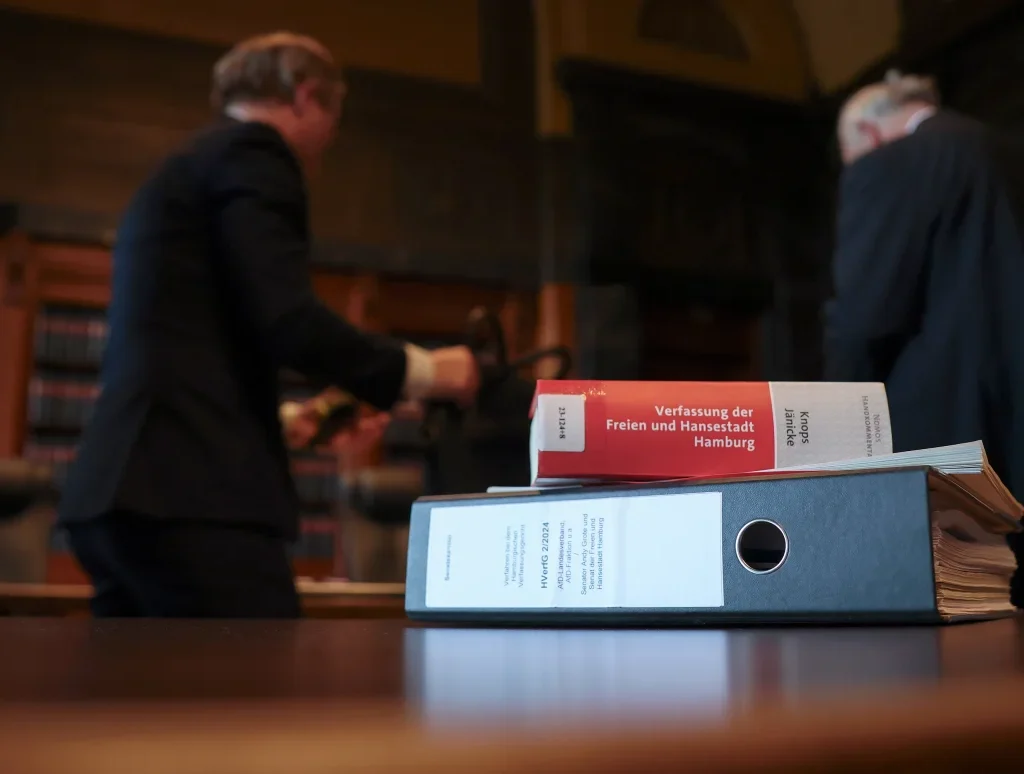
The court can then declare a party unconstitutional. The party would then be dissolved and banned from all political activity. It would also be prohibited from creating any substitute organizations.
At least two-thirds of the court’s justices must be in agreement in order to make the declaration.
In practical terms, if the AfD were to be banned, its sitting lawmakers would receive an automatic loss of mandate at the regional and federal level as well as in the European parliament.
Of the 152 seats the AfD currently has in the Bundestag , 42 are direct seats, where the respective candidates individually won the districts by majority. These 42 districts would need to vote again to fill the seats with new candidates from other parties. The other 110 AfD seats, which are allocated using a party list system, would remain vacant until the next election cycle. Similarly, the AfD’s seats in the European Parliament would remain vacant.
In either case, this would result in a shifting of the majority ratio, meaning that the seats of all other parties would gain a higher significance.



Related Posts


Stay Informed With the Latest & Most Important News
Previous Post
Next Post




-
 01Russia launches record number of drones at Ukraine after latest Trump-Putin phone call
 -
 02Iranian strikes on bases used by US caused $800m in damage, new analysis shows
 -
 03Trump says ‘good friend’ India may face up to 25% tariffs
 -
 04German chancellor warns of trade imbalance with China during first Beijing trip
 -
 05Iran’s latest warning to the US signals the hardliners are just getting started
 -
 06No food, no fuel, no tourists: Under US pressure, life in Cuba grinds to a halt
 -
 07Nepal in a bind as US-China drone war reaches Everest