



Now Reading: Lost underwater forests are returning to Sydney’s coastline
-
01
Lost underwater forests are returning to Sydney’s coastline


Lost underwater forests are returning to Sydney’s coastline
Sydney, AustraliaWNN —
Crayweed, a large, golden-brown seaweed, found along Australia’s southeastern coast, plays a crucial role in ocean health. Its underwater forests capture carbon, create shelter for marine species and serve as a nursery for creatures like abalone and rock lobsters.
Once widespread along Sydney’s coastline, it disappeared from a 70km around the 1980s, at a time when sewage was being discharged into the sea, according to Operation Crayweed. The conservation initiative, primarily run by scientists from universities and research institutes, aims to restore 60 hectares of forest in shallow rocky reef habitats.
“We’re not just bringing back one species, we’re building an entire ecosystem,” says Dr. Adriana Vergés, a professor of marine ecology at the University of New South Wales Sydney, and co-founder of Operation Crayweed.
Improvements in sewage disposal mean the water around Sydney
Improvements in sewage disposal mean the water around Sydney has become clean enough to support crayweed, according to the group, but for it to make a return, it must first be planted and then successfully reproduce.
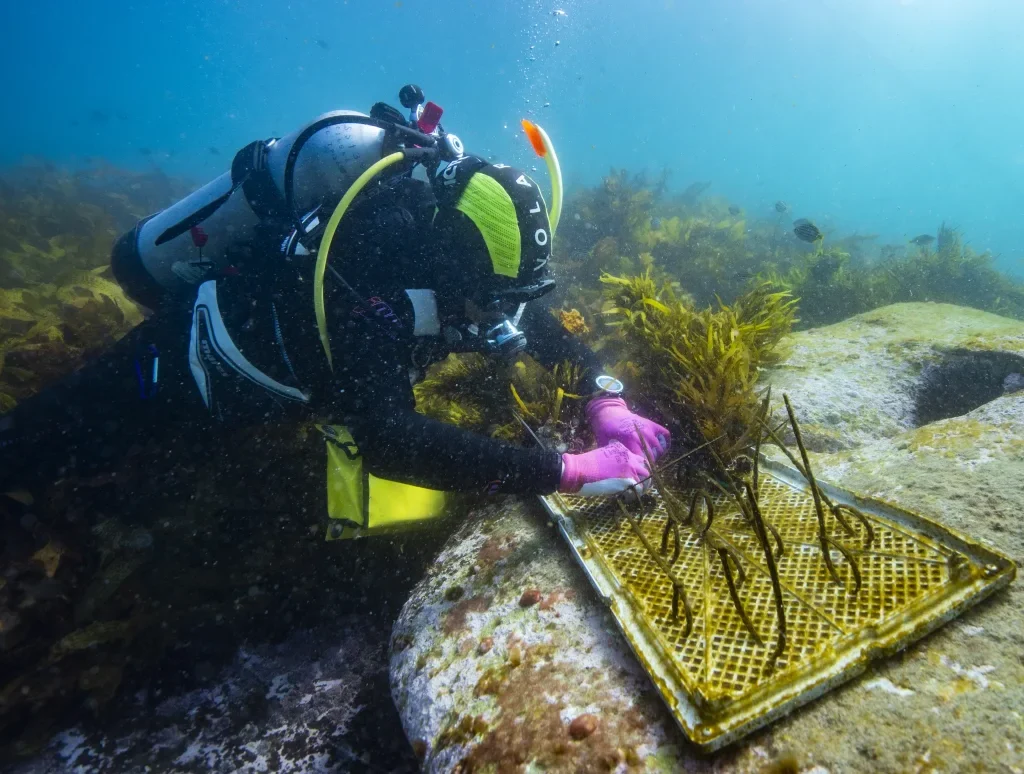
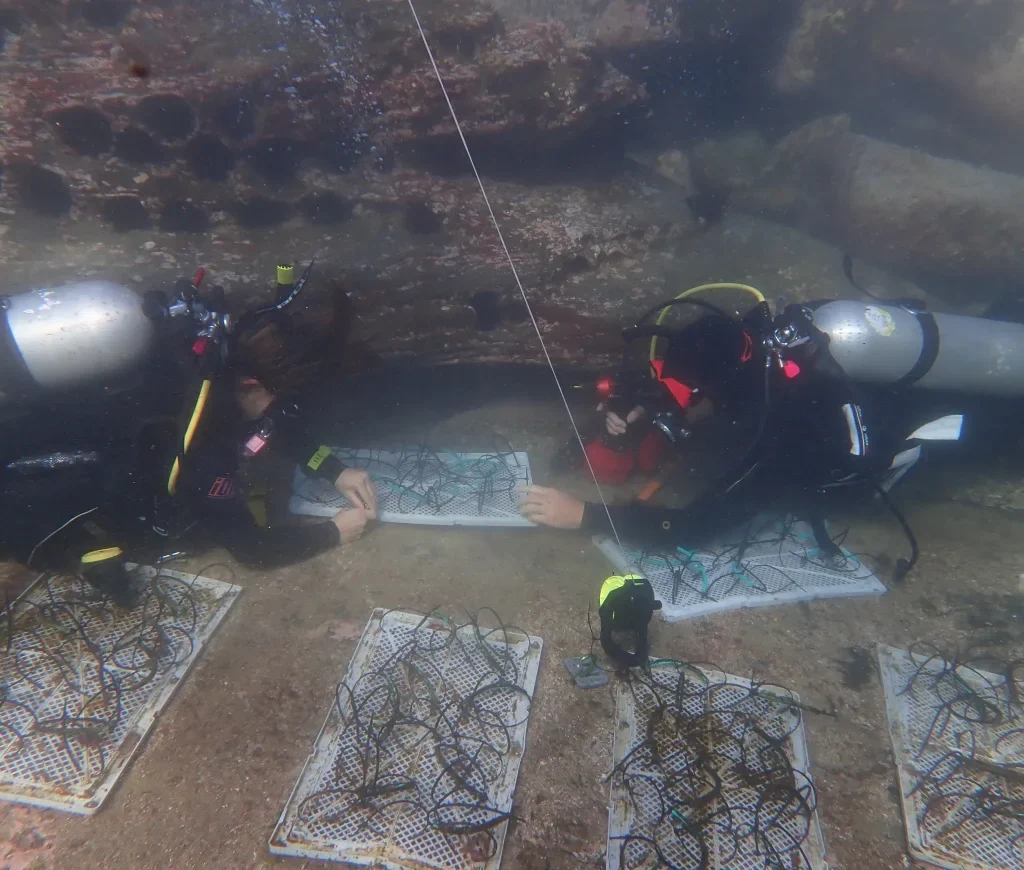
At designated restoration sites, scientists and volunteers attach healthy male and female crayweed collected from wild populations onto biodegradable mats fixed to reefs.
Crayweed reproduces when male plants release sperm into the water, which fertilizes eggs from the female plant. These fertilized eggs grow into young crayweed, known as “craybies,” which anchor to the seafloor and grow into new forests.
Once established, the mats are removed, and the forest continues to grow and spread on its own.
Since Operation Crayweed began over a decade ago, it has targeted 16 sites along Sydney’s reefs, seven of which now have established self-sustaining crayweed populations. The restored forests cover over two hectares, and microscopic animals are already returning, according to Vergés.
Three new sites, Lurline Bay, Dee Why, and South Maroubra, were added in 2024. Dee Why alone jumped from just 10 crayweed plants to 466 juvenile crayweed in a single year and by early 2025, more than 1,500 craybies had established themselves at South Maroubra, according to Operation Crayweed.
“I get a real kick out of seeing it. And now it’s expanded so much that you can see it even without getting in the water,” says Vergés. “When the tide is low, you can see the crayweed swaying as the water pulls away from the coast.”


Related Posts



Stay Informed With the Latest & Most Important News
Previous Post
Next Post





-
 01Venezuela accuses US of ‘extortion’ over seizure of oil tankers
 -
 02ZIONISM’S ENDURING SETTLER-COLONIALISM
 -
 03US used about a quarter of its high-end missile interceptors in Israel-Iran war, exposing supply gap
 -
 04Australia senator suspended after burka stunt in parliament
 -
 05Hardline lawmakers demand nuclear bomb as Iran braces for UN sanctions
 -
 06Britain to recognize Palestinian state unless Israel agrees to Gaza ceasefire
 -
 07Trump said he was ‘sharper than I was 25 years ago.’ Then he spent an hour appearing to doze off – again