


Now Reading: Trump seems to really be losing patience with Putin. But why now?
-
01
Trump seems to really be losing patience with Putin. But why now?

WNN —
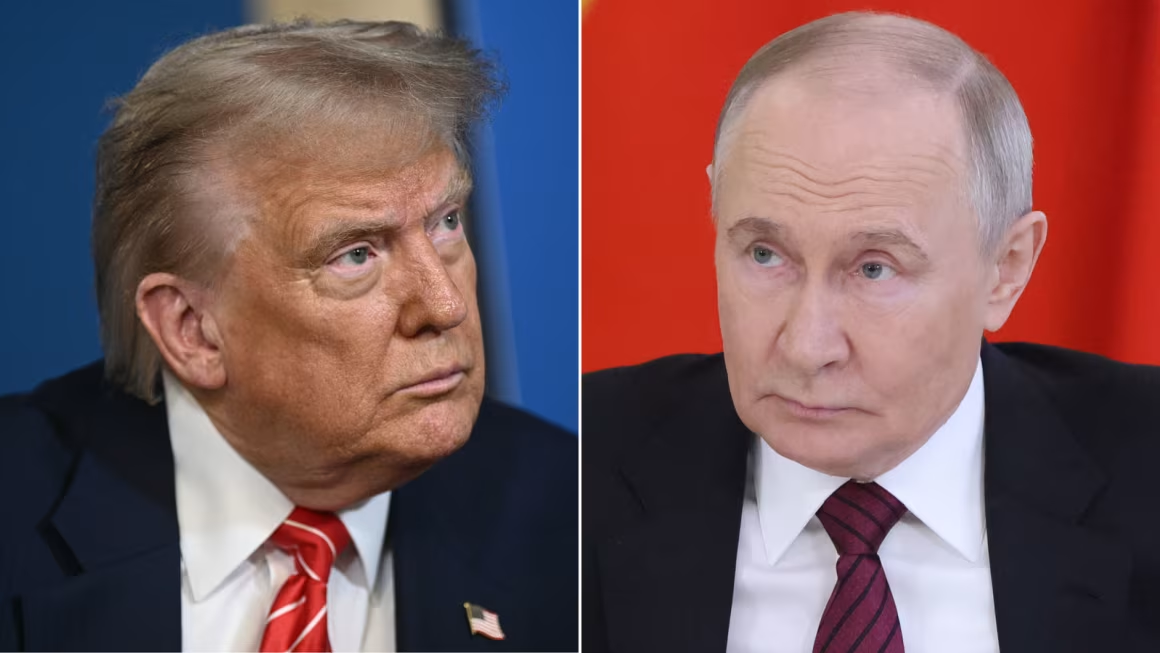
Five months ago, President Donald Trump turned heads when he claimed Russian President Vladimir Putin – the man who had invaded Ukraine – wanted peace in Ukraine.
“I believe he wants peace,” Trump said, adding: “I mean, I know him very well. Yeah, I think he wants peace. I think he would tell me if he didn’t. … I trust him on this subject.”
Trump has sung a very different tune in recent days, and especially on Tuesday.
After days of expressing displeasure with his latest phone call with Putin, Trump went even further at a Cabinet meeting. He suggested the man he had vouched for and spent years curiously avoiding criticizing might not be a reliable interlocutor. “We get a lot of bullsh*t thrown at us by Putin, if you want to know the truth,” Trump said. “He’s very nice all of the time, but it turns out to be meaningless.” It’s not the only suggestion that Trump is evolving in his stance – or at least his rhetoric – on the war in Ukraine.
This week he has reversed a brief pause in defensive weapons shipments to Ukraine (while suggesting this was undertaken by others in his administration). He has, for now, largely abandoned blaming both sides for the war, after almost always pairing any critique of Russia with a critique of Ukraine – as if they were equal partners in prolonging Russia’s war of aggression. And on Tuesday he without prompting praised the “courage” of Ukraine’s fighters, suggesting the huge investment the United States has made in Ukraine’s defense hasn’t been the boondoggle that many in the MAGA base believe. “And I will say this, the Ukrainians, whether you think it’s unfair that we gave all that money or not, they were very brave because somebody had to operate that stuff,” Trump said. “And a lot of people I know wouldn’t be operating it.”
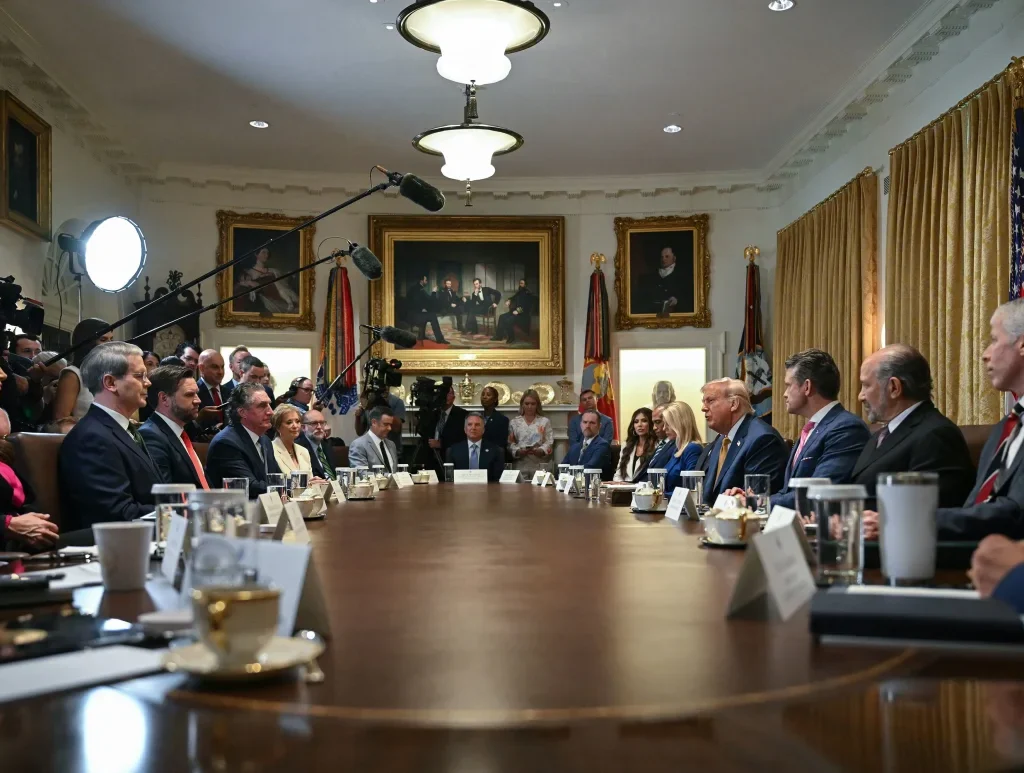
Quite notably, the American president on Tuesday declined to commit to a package of new sanctions on Russia that has the support of more than two-thirds of senators of both parties. To the extent Trump was truly done with Putin, that option is at the ready, and he’s not going there yet.
He could just as easily try this strategy and revert to a gentler approach.
But sharply criticizing Putin is also a card that Trump has been extremely reluctant to play.
But that appeared to be a politically oriented course correction as much as anything. Trump, who was cueing up another campaign for president, had been sharply criticized for praising Putin’s “genius” and “savvy” in invading Ukraine – at a time when virtually all of the Western world was condemning it. Those comments were shocking, even compared to Trump’s years of cozying up to Putin. So he briefly rebuked the invasion and then moved on, resuming his kid-gloves treatment of the Russian leader.
The question before us is whether Trump’s shift today will prove as fleeting as that was. Perhaps. But there are signs that it might not be.
For one, it seems the president might be coming to the realization that his goals in Ukraine are irreconcilable with Putin’s.
For Trump, it’s always about getting a “win” – in this case, the peace deal he promised and failed to obtain on Day One of his presidency. He hasn’t seemed to care too much about what that peace deal actually looks like and has floated huge concessions from Ukraine. But Putin has given almost no indication he’s truly interested in cutting a deal that involves anything except obtaining all of Ukraine.


Related Posts
Stay Informed With the Latest & Most Important News
Previous Post
Next Post




-
 01One killed, 11 injured in second Houthi strike on Riyadh airport in two days
-
 02US-Iran talks in Pakistan: Who’s attending, what’s on the agenda?
-
 03India opposition leaders briefly detained in election protest
-
 04Lost underwater forests are returning to Sydney’s coastline
-
 05War returns to Iran with Israel, US strikes
-
 06Iran’s regime is still intact – the coming days will show if it can hold out
-
 07Ford takes $19.5 billion hit as it pulls back on electric vehicle plans, halts F-150 Lightning production