


Now Reading: Prospect of US-Iran talks puts Netanyahu under pressure
-
01
Prospect of US-Iran talks puts Netanyahu under pressure
Prospect of US-Iran talks puts Netanyahu under pressure

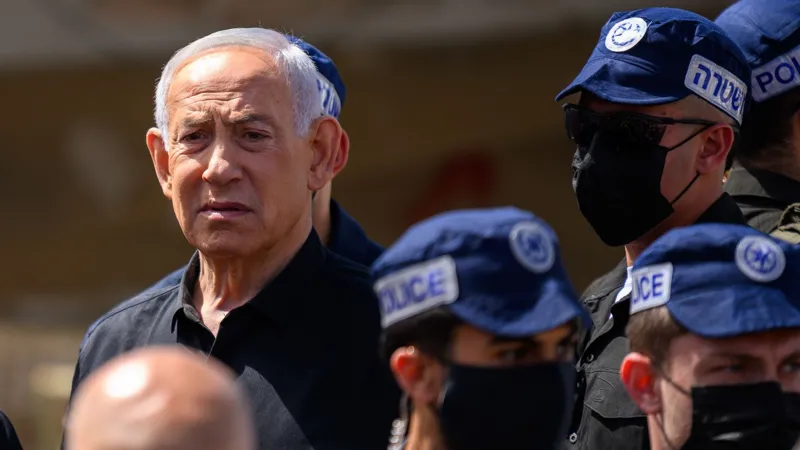
With mixed signals over US plans for fresh talks with Iran, the exchange of fire between Iran and Israel – the Middle East’s two arch-enemies – continues.
Iran fired several missiles at targets in northern and southern Israel overnight, after Israel carried out “dozens” of air strikes inside Iran on Monday, hitting command centres of the Islamic Revolutionary Guards Corp (IRGC) and Intelligence Ministry in Tehran, Israel’s army said, as well as weapons stores and air defences.
Around the latest blast site in northern Tel Aviv, balconies have been sheared off, and walls are shedding masonry into a crater between a cluster of residential buildings.
Local reports suggest this was a direct hit from an Iranian missile that narrowly missed several apartment blocks. Six people were reportedly wounded in the attack, though none seriously.
He described fleeing from his apartment in bare feet as glass shattered around him. When he looked back, a fire had already broken out in the debris behind him, he said.
There is still widespread speculation over Donald Trump’s motivation for opening a new dialogue with Tehran; negotiations have been used by the White House before as a smokescreen for military escalation, and thousands of US marines are currently being sent to the Middle East.
But to some in Israel, talk of negotiations is another indication that the US president is looking for a way out of the war, and that the goals of Israel and its superpower ally are starting to diverge.
“[Israeli Prime Minister Benjamin] Netanyahu doesn’t want a deal,” says Michael Milstein, a former military intelligence officer in Israel and now head of the Palestinian Studies Centre at Tel Aviv University.

But Netanyahu is treading a fine line, after promising Israelis this war would end the immediate threat from Iran and its network of proxies around the region. The bar for a deal he can sell to Israeli voters and allies is high at this point in the war.


Related Posts

Stay Informed With the Latest & Most Important News
Previous Post
Next Post




-
 01Why Trump is threatening to blockade a strait that Iran is already blockading
 -
 02Trump said he was ‘sharper than I was 25 years ago.’ Then he spent an hour appearing to doze off – again
 -
 03PM Shehbaz, other world leaders sign charter for Trump-led Board of Peace
 -
 04Eruption of Indonesia’s Mount Lewotobi Laki Laki volcano sends ash 11 miles high
 -
 05US readying another aircraft carrier for deployment amid Iran tensions
 -
 06What is the Power of Siberia 2 pipeline that Russia, China are planning?
 -
 07France leads a number of nations recognizing Palestinian state amid anger over Israel’s conduct in Gaza war