

Now Reading: India to Iran: How two wars shaped the rise of Pakistan’s Asim Munir
-
01
India to Iran: How two wars shaped the rise of Pakistan’s Asim Munir
India to Iran: How two wars shaped the rise of Pakistan’s Asim Munir


The war against India a year ago led to Munir’s elevation to the status of field marshal. Now he’s playing peacemaker.
Islamabad, Pakistan – Hours before a two-week ceasefire between the United States and Iran was due to expire on Wednesday, US President Donald Trump announced its extension. He named those who had urged him to do so: Pakistan’s defence forces chief, Asim Munir, and Prime Minister Shehbaz Sharif.
“Based on the fact that the Government of Iran is seriously fractured,” Trump wrote on Truth Social, “and upon the request of Field Marshal Asim Munir, and Prime Minister Shehbaz Sharif, of Pakistan, we have been asked to hold our attack.”
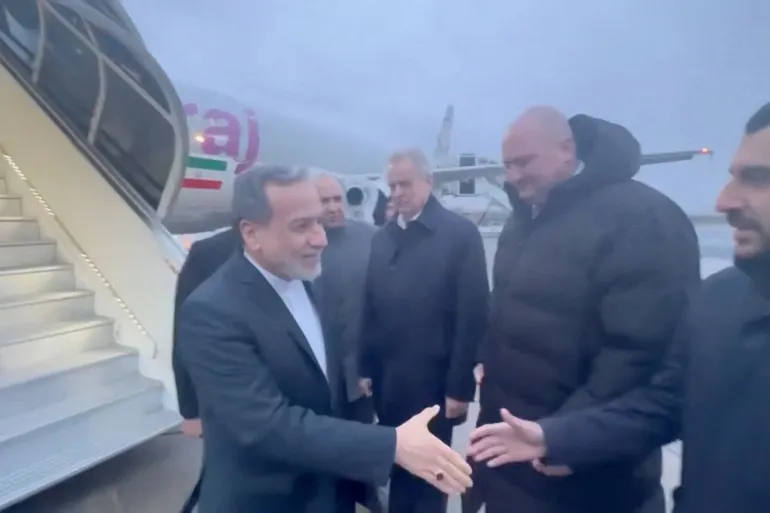
It was the latest public shoutout from Trump for Pakistan’s leadership, Munir in particular, over their role in attempting to mediate an end to the war between the US and Iran. On April 8, the US and Iran announced a Pakistan-mediated two-week ceasefire. That came about following hectic backchannel negotiations, including direct consultations Munir held with US Vice President JD Vance, Trump’s Special Envoy Steve Witkoff and Iranian Foreign Minister Abbas Araghchi. On April 11, Munir welcomed the Vance-led US delegation and the Iranian team led by Parliament Speaker Mohammad Bagher Ghalibaf as they landed in Islamabad for the first round of direct talks between the two nations. After those talks failed to yield a breakthrough, Munir undertook a three-day visit to Tehran, the first regional military leader to travel to the Iranian capital since the US-Israel war on Iran began on February 28, attempting to bridge the gulf in the positions adopted by Washington and Tehran.
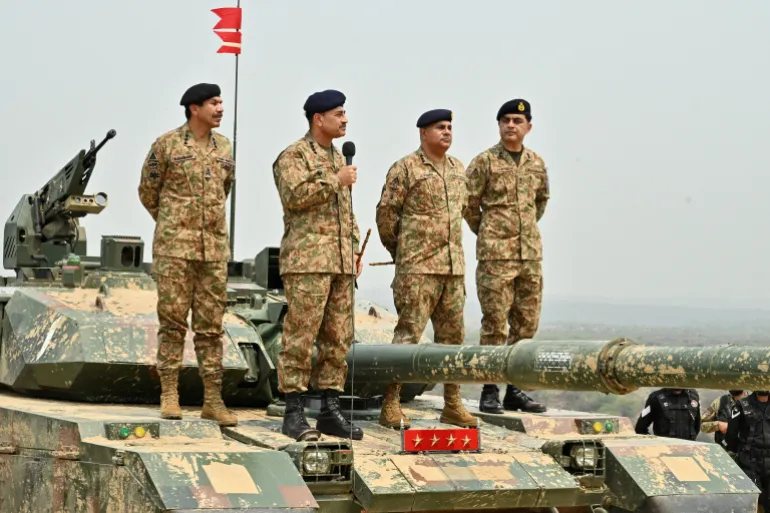
But even as Munir is today being cited by Trump as a peacemaker between the US and Iran, the military chief’s global rise was rooted in events that occurred a year ago, which led to a four-day war between India and Pakistan. On April 22, 2025, armed men killed 26 tourists, most of them Hindu men, in Baisaran Valley in Indian-administered Kashmir’s Pahalgam. India blamed Pakistan. Islamabad denied involvement and called for an independent investigation. Within two weeks, the two nuclear-armed neighbours were at war. The year since has marked a period of rapid transformation in Pakistan’s political and military landscape. Munir has risen from four-star general to field marshal, and then to the country’s first chief of defence forces (CDF), amid domestic criticism from opposition parties, before now emerging as the central figure in one of Pakistan’s most consequential diplomatic moments in decades. The war that changed everything After the Pahalgam attack, India launched Operation Sindoor on May 7, 2025, striking targets inside Pakistan and Pakistan-administered Kashmir.
Trump repeatedly claimed credit, saying so dozens of times. Pakistan thanked him and nominated him for the Nobel Peace Prize. India, on the other hand, denied Trump’s claims and insisted that the ceasefire was the result of bilateral communication with Pakistan — New Delhi’s policy rejects third-party involvement in bilateral disputes with Islamabad.
On May 20, Pakistan’s federal cabinet unanimously approved Munir’s promotion to field marshal, crediting his leadership during the war with India. This made him only the second officer in the country’s history to hold the rank after Ayub Khan. Unlike Ayub, Munir also retained his position as chief of army staff.
Imran Khan, former head of the US Institute of Peace (USIP) and geopolitical analyst, said the conflict with India proved pivotal for Munir’s global rise, although its roots lay in domestic developments.
“The May 2025 conflict with India was pivotal for Munir’s rise on the global stage. In an era of middle powers and great-power competition, everyone noticed. Given the broader backsliding of democracy globally, nobody was particularly focused on civil-military imbalance in Pakistan


Related Posts
Stay Informed With the Latest & Most Important News
Previous Post
Next Post


-
 01AI investments and Syria’s development – this week’s business headlines from the Middle East
 -
 02‘He did it for us’: US soldier recalls Jesse Jackson’s efforts to free him and two other POWs
 -
 03Oil prices climb past $105 a barrel as war in Iran enters third week
 -
 04How Pakistan won over Trump to become an unlikely mediator in the Iran war
 -
 05Cameroon’s president seeks an eighth term at the age of 92
 -
 06Dad shot daughter after ‘arguing about Donald Trump’
 -
 07MoD staff warned not to share hidden data before Afghan leak