
Now Reading: Should the US be worried? India’s Modi set for rare China trip after Trump’s tariff sting
-
01
Should the US be worried? India’s Modi set for rare China trip after Trump’s tariff sting
Should the US be worried? India’s Modi set for rare China trip after Trump’s tariff sting


A relationship frozen after a deadly clash high in the Himalayas five years ago appears to be thawing under the heat of US President Donald Trump’s economic pressure.
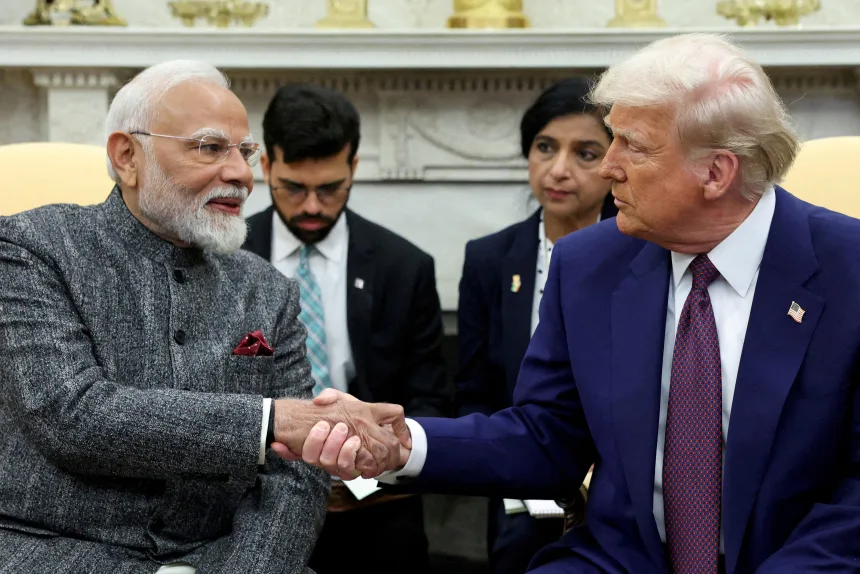
For the first time since 2018, Indian Prime Minister Narendra Modi will travel to China this week to attend a summit hosted by Chinese leader Xi Jinping, a visit that comes after Trump imposed punishing 50% tariffs on imports from India.
In a moment of geopolitical whiplash, the two leaders – whose soldiers fought a brutal hand-to-hand combat with fists, rocks and clubs at their disputed border in 2020 – could now shake hands, prioritizing economic stability over entrenched rivalry.
Alongside Modi, world leaders from Russia, Pakistan, Iran and Central Asia will join Xi this weekend for what Beijing has said will be the largest summit yet of the Shanghai Cooperation Organization (SCO), a Moscow and Beijing-founded regional security club aimed at reshaping the global balance of power.
India’s presence at the event is the most telling example yet of the warming ties between the two Asian powers – a budding realignment that threatens to undo years-long US efforts to cultivate New Delhi as a counterweight against a rising and increasingly assertive China.
While a thaw in India and China’s fractious relationship was already underway, analysts say Trump’s “America First” policies are making the two leaders, who have built their political brands on a strong foundation of nationalism, explore a partnership of necessity.
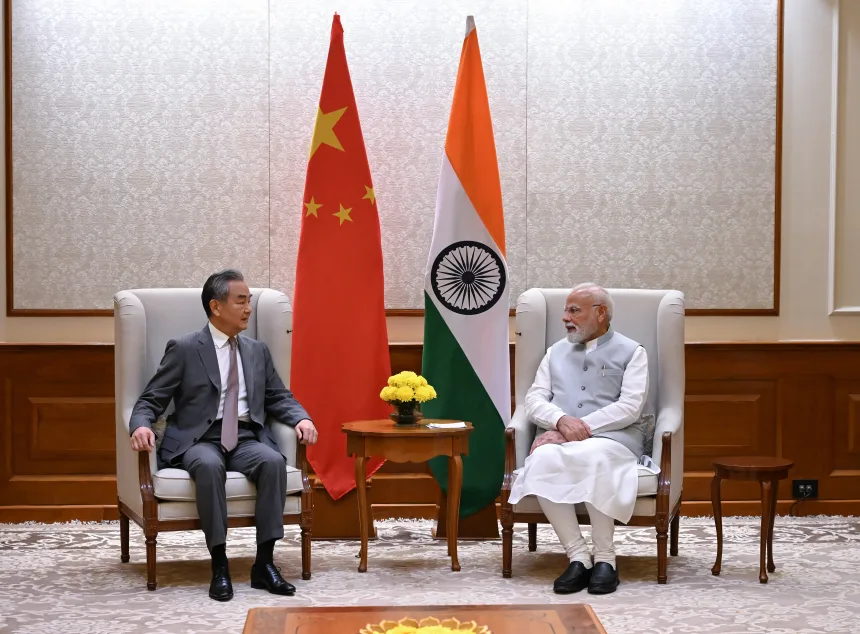
Following a meeting between Chinese Foreign Minister Wang Yi and Prime Minister Modi in New Delhi last week, both sides recognized the recent improvements in their strained relationship.
“India-China relations have made steady progress guided by respect for each other’s interests and sensitivities,” the Indian leader said. “Stable, predictable, constructive ties between India and China will contribute significantly to regional as well as global peace and prosperity.”
At the SCO summit, as well as China’s Xi, Modi will be in the presence of the prime minister of traditional adversary Pakistan, with whom India recently engaged in a deadly conflict, as well as traditional partner Russia, whose continued oil sales to India since its invasion of Ukraine have irked the US and pushed Trump to slap 25% tariffs on Indian goods as punishment.
This engagement with a China-dominated bloc stands in stark contrast to India’s deepening ties with the Quad – a security grouping with the US, Japan, and Australia – that is widely seen as a democratic counterweight to China’s growing influence in the Indian Ocean.


Related Posts
Stay Informed With the Latest & Most Important News
Previous Post
Next Post




-
 01China is trying to play peacemaker in the Iran war – will it work?
 -
 02‘High probability’ Trump and Xi will meet this year, Rubio says
 -
 03Pakistan condemns ‘unprovoked’ Israeli attack on Syria air base
 -
 04Britain to recognize Palestinian state unless Israel agrees to Gaza ceasefire
 -
 05Iran after Ayatollah Ali Khamenei
 -
 06Why is Pakistan selling its JF-17 fighter jets to Bangladesh and others?
 -
 07Coca-Cola may swap out high-fructose corn syrup with cane sugar, Trump says. Is that healthier?